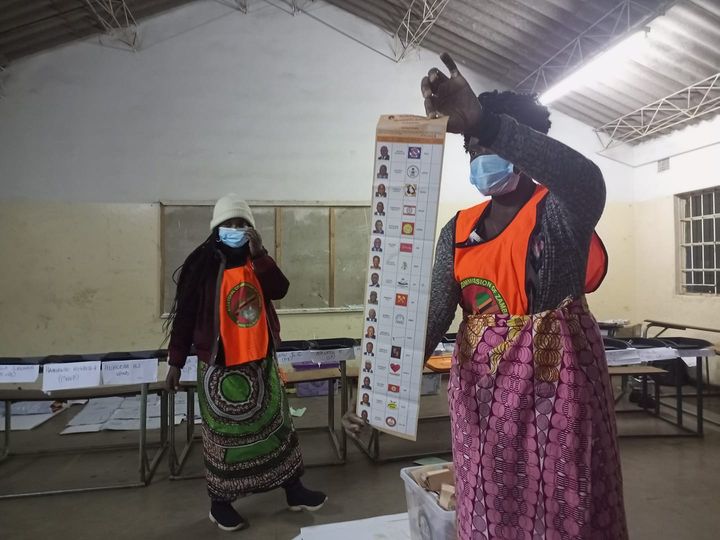
How the campaign calendar could shape Zambia’s 2026 election outcome

Breaking News Zambia
News107 Views With all protocols like constituency delimitation, nominations, and candidate selection complete and parties on the campaign trail, Zambia’s 2026 general election has entered a phase where timing itself becomes a political factor. The length of the campaign period, the spacing of key activities, and the sequencing of voter engagement will influence turnout, messaging, […]
107 ViewsWith all protocols like constituency delimitation, nominations, and candidate selection complete and parties on the campaign trail, Zambia’s 2026 general election has entered a phase where timing itself becomes a political factor.
The length of the campaign period, the spacing of key activities, and the sequencing of voter engagement will influence turnout, messaging, and ultimately who wins in August.
The Electoral Commission of Zambia has cleared the administrative path.
Boundaries are gazetted, voters’ rolls are aligned to new constituencies, and party candidates are confirmed.
That means the race will be decided in the weeks between now and polling day, not in boardrooms or courtrooms.
In that sense, the campaign calendar is now the main variable shaping strategy and voter behaviour.
A longer, well-structured campaign period tends to reward organisation and message discipline.
Parties with established structures can use the time to reach rural areas, repeat policy messages, and respond to local concerns.
Candidates who are new to a seat benefit from multiple touchpoints to introduce themselves and build trust. Where the calendar is compressed, name recognition and incumbency carry more weight because there is less time to close an information gap.
Zambia’s August election date gives campaigns roughly three months of active campaigning after nominations. That window allows for distinct phases.
Early weeks are typically used for constituency launches, manifesto rollouts, and media engagement. The middle period is when parties intensify door-to-door work, community meetings, and issue-based debates.
The final stretch is about voter mobilisation, protecting the vote, and ensuring supporters know where and when to cast ballots.
Each phase carries risks and opportunities. A slow start can leave candidates playing catch-up, especially in newly created or reconfigured constituencies.
An overly aggressive middle phase can lead to fatigue or clashes at rallies. A weak closing phase can depress turnout even when a party has strong support on paper.
The parties that manage pacing will have an advantage.
The calendar also shapes policy debate. With administrative questions settled, voters will expect clear answers on jobs, cost of living, agriculture, health, roads, and education. Candidates who use the early weeks to explain how they will address those issues are more likely to frame the contest. Those who delay detailed proposals risk being defined by opponents or by events on the ground.
Youth and first-time voters are another factor tied to timing. Universities and colleges are in session through much of the campaign period, which creates opportunities for campus engagement, but also competition for attention with exams and holidays.
Parties that schedule targeted outreach early, and follow up consistently, are more likely to convert interest into turnout. Late or one-off engagements rarely produce the same result.
Logistics are equally calendar-dependent. Transport, fuel, campaign materials, and media slots must be spread across weeks, not days. A campaign that front-loads spending may struggle in the final weeks when voter attention is highest. A campaign that holds resources too long may fail to build momentum. The most effective approach is a steady build with a visible finish.
Peaceful conduct is also linked to the calendar. A stretched timeline increases the number of rallies and interactions, which raises the importance of adherence to the electoral code. The ECZ, political parties, traditional leaders, and civil society all have a role in keeping the environment calm. When the calendar is respected and rules are clear, voters are more likely to participate.
The geography of campaigning matters too. Zambia’s mix of urban and rural constituencies means that travel time must be planned. In Copperbelt and Lusaka, high population density allows multiple events in a day. In Western, Luapula, or Muchinga, distances are greater and road conditions can affect schedules. A calendar that accounts for geography reduces wasted days and increases voter contact.
For the Tonse Pamodzi Alliance, the United Party for National Development, and other parties, the task is similar but the starting points differ. Incumbents can campaign on record and projects, but must explain future plans. Challengers can campaign on change, but must show readiness to govern. Both must use the calendar to convert policy into persuasive, localised messages.
Observers will be watching three indicators in the coming weeks. One, the consistency of campaign activity across provinces, not just in strongholds. Two, the quality of voter education and how clearly citizens understand polling arrangements in new constituencies. Three, the tone of public meetings and whether debate stays focused on issues.
If the calendar is used well, the 2026 election will be decided on policy and service delivery. If it is mismanaged, turnout could drop and administrative confusion could return in a different form. For voters, the practical outcome will be shaped by how often they see candidates, how clearly they hear proposals, and how confident they feel on polling day.
With nominations done and the map settled, Zambia now has a campaign window that favours preparation over reaction. How parties use that time, week by week, will go a long way toward determining the result in August.
Community Feedback