
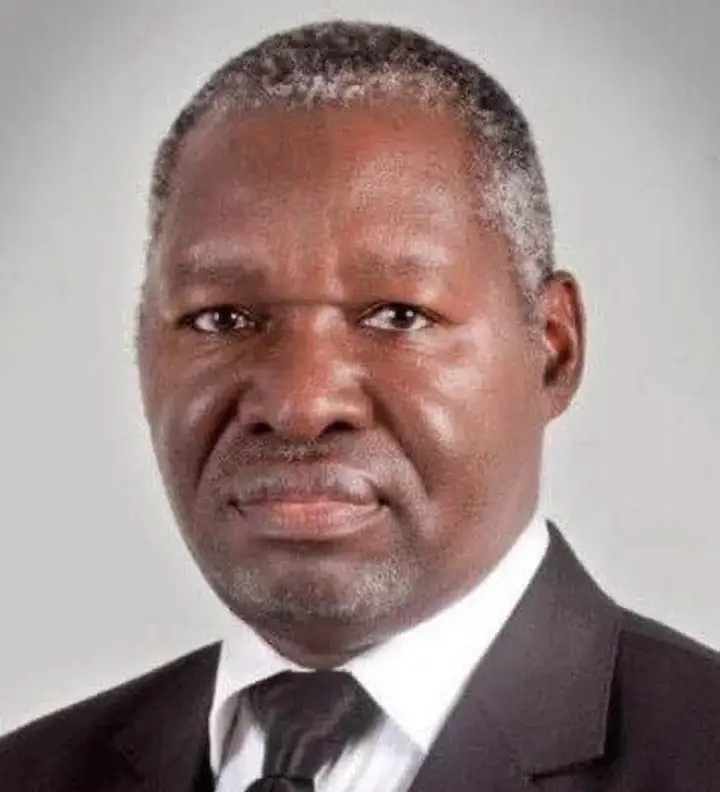
HOW DERRICK CHITALA BECAME MBITA CHITALA

Breaking News Zambia
SportsHOW DERRICK CHITALA BECAME MBITA CHITALA “… We should be proud of our African or traditional names. Where can you find a white man called Mbita or Chintundya?” Hey folks, Over 24 years ago, on Wednesday, January 9, 2002, Mr. Derrick Chitala—known today as Dr. Mbita Chitala—phoned me saying he had a story for me. […]
HOW DERRICK CHITALA BECAME MBITA CHITALA
“… We should be proud of our African or traditional names. Where can you find a white man called Mbita or Chintundya?”
Hey folks,
Over 24 years ago, on Wednesday, January 9, 2002, Mr. Derrick Chitala—known today as Dr. Mbita Chitala—phoned me saying he had a story for me. I rushed to meet him.
The big story? He was legally dropping his Christian forename to officially adopt his indigenous name, Mbita.
For the Millennials and Gen Zs who might have been too young to follow such profound and historical developments back then, I am sharing the story below as it was published in The Post newspaper—the paper that always dug deeper.
****
Chitala Changes Name
The Post (Lusaka)
10 January 2002
By Amos Malupenga
DEPUTY Minister in the Office of the President, Derrick Chitala, has legally changed his fore name to Mbita.
Chitala yesterday said he decided to change his name to coincide with the “New Deal” under President Levy Mwanawasa’s leadership.
“I am no longer Derrick,” Chitala said. “From now on, I will be called Mbita Chintundya Chitala. Previously, I was called Derrick Chintundya Chitala.”
He said he had already instructed his lawyer, Darlington Mwape, to change the names through a deed poll. Chitala said Mbita represents a god or deity of unity in the Lungu tribe.
He said when he was born in 1955, his father was imprisoned by the colonial masters and his grandmother gave him the name of Chintundya.
“My mother tells me that I was crying out a lot as a baby and when my father came out of prison, he gave me the name of Mbita,” Chitala said. “From that time, I am told, I stopped crying.”
Chitala said when he started going to school at Kawimbe Mission, a Scottish missionary – Sister Lee – gave him the name Derrick because everyone was expected to have a Christian name.
“Now that we have a New Deal, things have to be put in proper perspective,” Chitala said. “We should be proud of our African or traditional names. Where can you find a whiteman called Mbita or Chintundya? In fact, all my children have traditional names. I was the only misplacement in the family. Now we have to regularise things.”
Chitala said through the deed poll, the names on all his documents will have to change.
“The names on my passport, degree, national registration card and all documents will have to change to reflect Mbita Chintundya Chitala and not Derrick Chitala.”
#ConversationsWithMemorablePersonalities
****
Author’s Note:
This is especially for my traditional cousins from Chipata who may be inspired or motivated by Dr. Mbita Chitala to change their strange names. These kapolo cousins of mine have strange and comical names like Water Manzi, Problems Mabvuto, Simcard Banda, Mobile Zulu, Dontcare Mwanza, Livewire Njovu.
So, for your information cousins, a Deed Poll in Zambian law is a legal document used to officially renounce a former name and assume a new one. It is a requirement whenever an individual (such as a person who recently married or someone correcting a spelling error, or personal preference like in the case of Dr Chitala) needs to change the official names appearing on their National Registration Card (NRC), passport or academic certificates.
The Deed Poll Process
Changing your name lawfully involves a specific procedure to ensure the new identity is legally recognised by the Zambian government, financial institutions, and the Passport Office, among others.
1. Drafting: Engage a lawyer, like Dr Chitala did with Darlington Mwape, to draft the Deed Poll, accompanied by a sworn Statutory Declaration stating the reasons for the name change.
By the way, Darlington Mwape was also, coincidentally, President Mwanawasa’s Legal Advisor.
2. High Court Sealing: Submit the documents to the High Court of Zambia to be officially verified and sealed.
3. Gazetting: Within 21 days of sealing, the name change must be published in the Government Gazette (handled by Government Printers) and advertised in a state-owned newspaper such as the Daily Mail or Times of Zambia or any widely circulated national newspaper.
4. NRC Update: Take the sealed Deed Poll, gazette clippings, and original NRC or passport to the Department of National Registration, Passport and Citizenship to update your records and be issued with a new NRC or passport. The same can be done with academic papers by approaching the relevant authorities.
Cheers!
Amos Malupenga
Author



Community Feedback