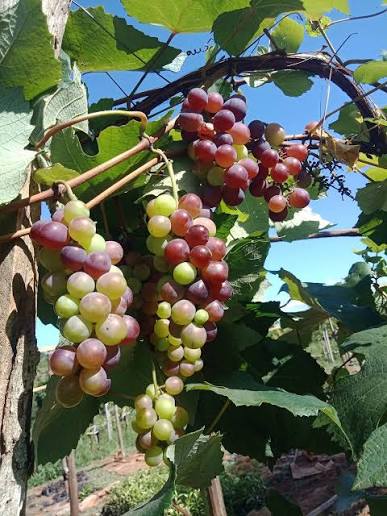
Grape farming could reduce wine imports in Zambia

Breaking News Zambia
NewsZambia to embrace grape farming as a […]
Zambia to embrace grape farming as a pathway to unlocking the country’s untapped wine industry potential. Despite a rising demand for wine and grape-based beverages, Zambia continues to produce very few grapes, a situation experts attribute to limited promotion rather than unsuitable climate conditions.
Agriculture expert Matthew Ntabo told the Zambian Business Times (ZBT) that Zambia’s climate is well-suited for grape production, but the crop has not received the same attention as other horticultural crops.
“It is not because of the climate. It has mainly been because of the culture and not seeing the opportunities. Grapes have never really been promoted,” Ntabo explained. He noted that while a handful of commercial farms grow grapes, small-scale farmers have yet to adopt the crop due to a lack of awareness, organized support, and deliberate government promotion.
“We have seen government promote moringa and many citrus fruits, but grapes have never really been tried. It is an issue of changing the culture,” he added. Ntabo emphasized that Zambia’s dependence on traditional crops like maize hampers diversification into high-value crops such as grapes, which offer better returns and help mitigate market oversupply.
Increasing grape production, he argued, could pave the way for a robust local wine industry and reduce Zambia’s reliance on imported grapes and wine, particularly from South Africa. “There is already a ready market for wines in Zambia. It presents an opportunity for the wine business,” Ntabo said.
However, he stressed that success in grape farming would require building a strong value chain, including guaranteed markets and processing facilities. “We need a value chain arrangement. Farmers should grow knowing there is an industry ready to process the grapes. If people grow without a market, the whole system becomes distorted,” he said.
Ntabo suggested organizing farmers into outgrower schemes and investing in grape processing to encourage broader participation and create sustainable demand. He observed that most grapes sold on the Zambian market are imported, while local production remains limited.
He further urged the government and stakeholders to launch initiatives promoting grape farming and to support youth involvement in high-value agriculture. “Agriculture is constantly evolving. Young people should seize opportunities in emerging crops like grapes,” Ntabo concluded.
Article by Karen Ngulube





Community Feedback