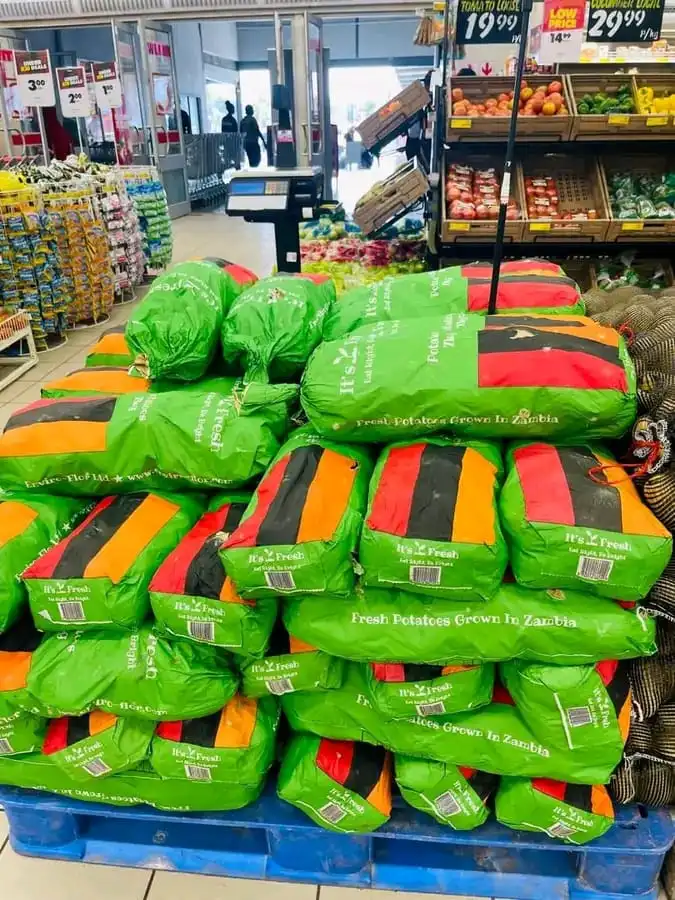
“FROM SA TRUCKS TO ZAMBIAN FLAG”: HOW ZAMBIA WON THE POTATO WAR

Breaking News Zambia
NewsBy Francis Chipalo Years after a bitter fight over imported chips and Irish potatoes, “Made in Zambia” potatoes are now sitting proudly on Shoprite shelves, branded with the national flag. The victory is being hailed as proof that Zambia can win the import substitution battle, if farmers and government stay the course. The war began […]
By Francis Chipalo
Years after a bitter fight over imported chips and Irish potatoes, “Made in Zambia” potatoes are now sitting proudly on Shoprite shelves, branded with the national flag.
The victory is being hailed as proof that Zambia can win the import substitution battle, if farmers and government stay the course.
The war began under Zambia National Farmers Union President Jervis Zimba.
He went head-to-head with government and importers, demanding a ban or strict restriction on Irish potatoes and chips from South Africa.
“Zambia is capable of producing the commodity,” Zimba argued at the time.
“We are exporting jobs and forex while our farmers are failing.”
Importers fired back: Zambia had no cold rooms, no dryers, no storage. A ban, they warned, would mean empty shelves and high prices.
The argument dragged on. But the pressure worked.
Today, that fight is bearing fruit or rather, potatoes.
Renowned lawyer Dickson Jere says he was “pleasantly impressed” to see Zambian potatoes, properly branded and packaged, in major retail chains.
“Capacity has been developed especially with the bigger boys such as Buya Bamba… we are on the right track!” Jere wrote.
Companies like Buya Bamba invested in storage, grading, and packaging. Farmers got better inputs and market linkages. And retailers started stocking local.
For Jere and many farmers, the potato win is a blueprint.
“Let us now do the oranges, grapes, apples and all,” he urged.
The message is clear: If Zambia can replace imported potatoes, it can replace other foods it spends millions in forex to import every year.
Agriculture experts say the same model protect local industry for a time, while aggressively building storage and value addition can work for fruits, dairy, and processed foods.
This means jobs: More work for farmers, truckers, pack houses, and processors. Forex saved: Less money leaving the country to pay SA suppliers. Food security, less reliance on imports during regional shortages. National pride: Seeing the Zambian flag on food in a major chain, among other benefits.
ZNFU says this is exactly what Zimba envisioned: not a permanent ban, but a fighting chance for Zambian farmers to compete.
Government and the private sector are now being challenged to replicate the potato success.
Cold rooms. Dryers. Contract farming. Market access.
With those in place, Zambia may not need to import what it can grow.
As one farmer put it: “We stopped begging for shelf space. We earned it.”
These are achievements which BuyZed Founder and promoter Evans Kazonga Ng’oma is proud of, emphasizing that Zambia has what it takes to feed not only the African continent, but the entire world as a whole.
Picture credit: Dickson Jere Facebook page.





Community Feedback