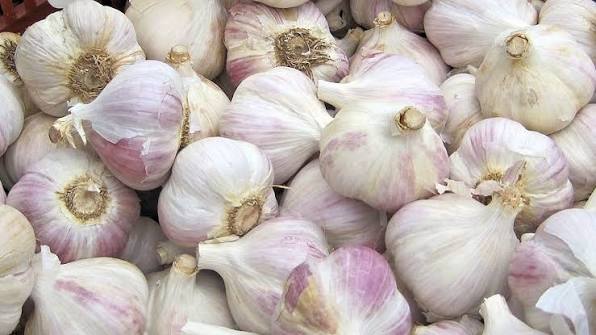
Do you know why Zambian garlic sells for K30/Kg and Chinese garlic for K90/Kg?

Breaking News Zambia
NewsThe National Association for Smallholder Farmers (NASFA) […]
The National Association for Smallholder Farmers (NASFA) has revealed that the wide price gap between locally produced garlic and imported Chinese garlic is largely driven by differences in size, quality, maturity and presentation of the produce.
Speaking in an interview with Zambian Business Times – ZBT, NASFA Executive Director, Dr. Frank Kayula said Zambian farmers are often harvesting garlic too early, resulting in smaller bulbs that attract lower prices compared to larger and cleaner imported products.
Dr. Kayula said current market observations showed Zambian garlic trading at around K30 to K40 per kilogram in some markets, while Chinese garlic was fetching as much as K90 to K100 per kilogram.
“Well, it most likely it’s the size and we tend to harvest too early, and the size is very small,” he said.
Dr. Kayula added that consumers and traders are willing to pay more for garlic that is bigger, clean and visually attractive.
“The one which looks big and clean and nice will fetch a much higher prices and that’s mainly the reason, it’s the size and cleanliness,” he said.
Meanwhile, Dr. Kayula warned that continued recycling of the same garlic varieties by local farmers could be contributing to declining bulb sizes and lower returns.
“We have varieties, but most of the people are just recycling the same, especially the Zambians, they are recycling the same varieties, that’s why they get smaller and smaller sizes,” he said.
Dr. Kayula further attributed the competitiveness of imported garlic to better production practices, saying foreign producers pay greater attention to allowing the crop to reach full maturity before harvesting, unlike some local farmers who rush their produce to market.
“Our friends are putting much mind as they are producing their garlic and also making it mature completely but for us, we want to harvest it very early,” he said.
Dr. Kayula said farmers could improve their earnings by changing to high-yielding varieties and ensuring the produce is properly prepared before reaching the market.
“Changing to varieties that are high-yielding, that’s number one, number two, also preparing the product before you put it on the market, let it look clean,” he said.
Dr. Kayula told ZBT that farmers should avoid taking poorly cleaned produce to the market, saying presentation remains an important factor in determining the price of agricultural commodities.
Article by Philip Sinkala, Philip is a Journalist & news analyst at the Zambian Business Times – ZBT





Community Feedback