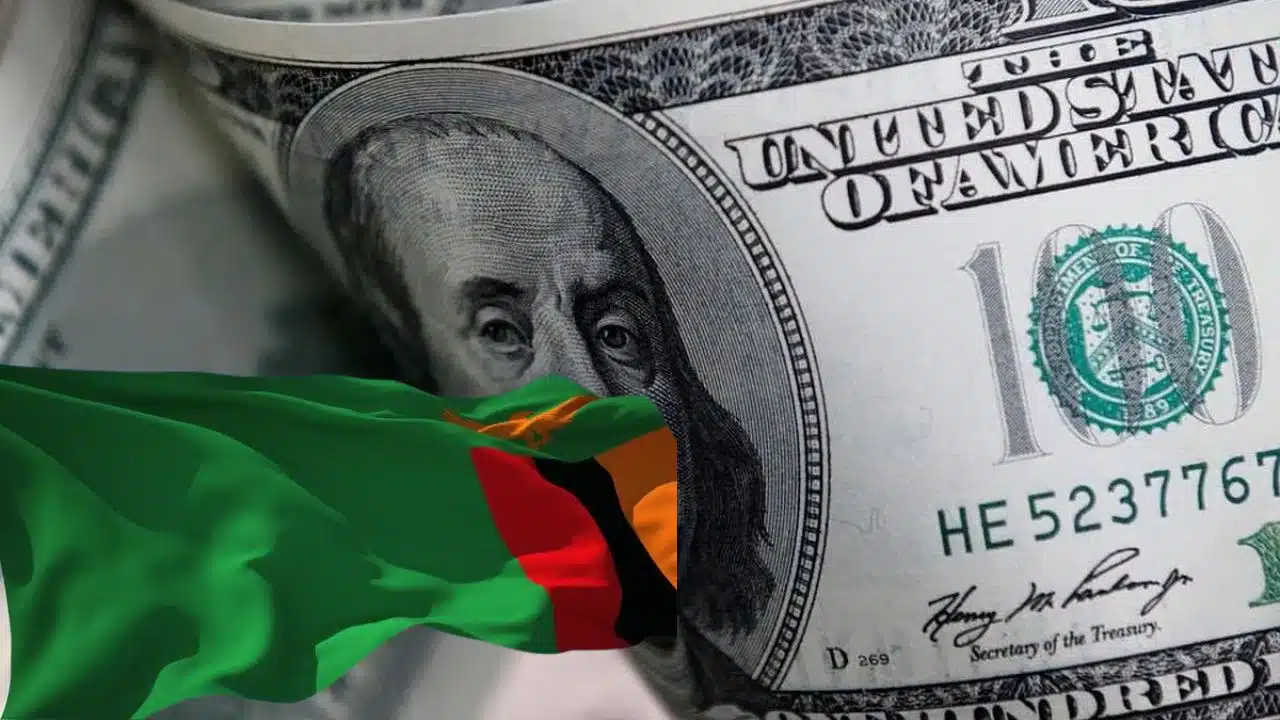
Did you know that Zambia’s USD $6.2 reserves are held in Switzerland?

Breaking News Zambia
BusinessThe Bank of Zambia – BoZ has […]
The Bank of Zambia – BoZ has revealed that the Gross international reserves had increased to a historic high of USD6.5 billion in February, mostly supported by foreign exchange purchases.
Speaking during the 2026 first quarter media briefing attended by the Zambian Business Times-ZBT, BoZ Governor Dr Denny Kalyalya, however, said Reserves closed the quarter at USD6.2 billion, equivalent to 5.2 months of import cover.
Dr Kalyalya noted that the observed decline in March 2026 was largely on account of Government payments (USD114.7 million) related to fuel procurement, need by the Bank of Zambia to support the market (USD106.5 million), and Government debt service (USD40.1 million).
The Governor noted that this was USD700 million higher than the December 2025 reserve stock of USD5.5 billion, equivalent to 4.8 months of import cover Meanwhile, when responding to a Zambian Business Times-ZBT, enquiry during the Q4 2025 briefing BoZ Governor clarified the management of the country’s USD reserves, emphasizing that the majority of these assets are held with reputable international financial institutions rather than domestically.
When asked by ZBT about the proportion of US dollar reserves held domestically versus abroad, Governor Kalyalya explained that the majority of Zambia’s reserves are not held within the country but are invested in foreign institutions, primarily in Switzerland.
“The question of where our reserves are held is fundamentally about how money works in the global financial system. In reality, when people refer to having money in the bank, what they actually possess is a record of their claim on the bank, not the physical cash itself. Similarly, for central banks, reserves are not kept in treasuries within the country. Instead, they are invested where they can generate value and returns.” “When we talk about reserves, it’s important to recognize that the actual funds are not physically stored in Zambia.
Instead, these reserves are invested abroad, where they can generate returns,” Kalyalya noted when responding to a ZBT question. He emphasized that central banks including from others nations, including Zambia’s, typically deposit reserves with international institutions such as the Bank for International Settlements (BIS) in Switzerland.
Dr Kalyalya explained that these deposits not only safeguard the reserves but also allow them to earn interest, contributing to the country’s financial stability. “When the need arises to use these reserves, we withdraw and allocate them as necessary. This is standard practice among central banks globally. The only asset typically held domestically is gold. But these others, they are invested in different places. There is a bank which is a bank for all central banks in the world. This is the bank for the international settlements in Switzerland and that’s where most of these reserves are held.”
He added that holding reserves domestically would not yield interest or financial benefits. “If we held all our reserves locally, they would not generate the value or interest we require. By investing them internationally, we ensure that our assets are working for us. This practice is common among countries globally, with gold being the exception, as it is often physically held by central banks.” Dr Kalyalya told ZBT.
He further clarified that the reserves are readily accessible for use, with withdrawals made as needed to support national financial obligations. He concluded by emphasizing that this approach is designed to maximize the utility and safety of Zambia’s reserves while supporting the country’s economic stability and growth.
Article by Karen Ngulube






Community Feedback