Did you know that Zambia’s electricity consumption increased by nearly 50% in 2025?

Breaking News Zambia
NewsZambia’s electricity consumption soared to 15,470.6 GWh […]
Zambia’s electricity consumption soared to 15,470.6 GWh in 2025, according to the Energy Regulation Board (ERB) energy sector report, an unprecedented 48.2% jump from the previous year. This surge, driven largely by the mining, trade, and construction sectors, has reignited debate about the nation’s energy future and the need for further investment in power.
The ERB report attributes the growth in electricity demand primarily to the mining sector, which nearly doubled its usage from 4,649 GWh in 2024 to 9,785 GWh in 2025. Trade and construction sectors also saw significant increases, while the transport and miscellaneous sectors experienced notable declines in consumption.
Despite the rising demand, Zambia’s peak system demand actually dipped slightly to 2,200 MW in 2025 from 2,300 MW in 2024, even as transmission and distribution losses remained above key performance targets. On the supply side, national electricity generation rebounded by 7% to 14,560 GWh in 2025, recovering from the previous year’s drought-induced slump.
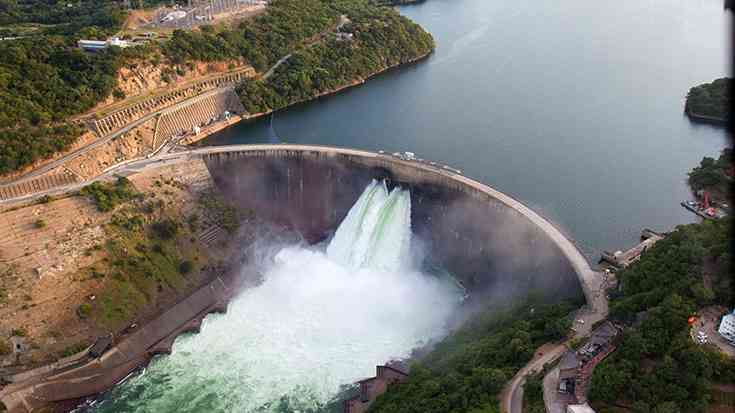
Most of this increase came from existing large hydropower stations, whose output grew by 1,230 GWh, while newly commissioned plants contributed an additional 515 GWh. However, overall generation remains constrained, and hydropower stations are still recovering from the impact of prolonged dry spells.
The report highlights the growing importance of diversifying generation sources, particularly as climate-related challenges threaten the reliability of traditional southern hydropower stations. In this context, experts are calling for renewed investment in the country’s northern provinces, Northern and Luapula, which benefit from above-average and more reliable rainfall, as well as underutilized water resources such as Lake Tanganyika, Lake Bangweulu, and Lake Mweru.
Industry specialists suggest that tapping into these water bodies could offer a sustainable path to scaling up hydropower and stabilizing national electricity supply, especially as demand from mining and other energy-intensive sectors continues to rise.
Article Justine Phiri






Community Feedback