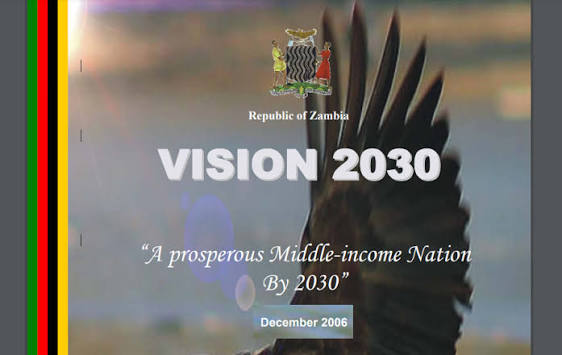
Did you know that since 2005, Zambia has been targeting to achieve middle-income status by 2030?

Breaking News Zambia
NewsLaunched in 2005, Zambia’s Vision 2030 was […]
Launched in 2005, Zambia’s Vision 2030 was an ambitious national plan aimed at transforming the country into a middle-income nation by 2030. With just over four years remaining to the target date, experts are expressing serious doubts about the country’s ability to meet these goals. Zambia is officially classified by the World Bank as a lower-middle-income country, meaning it is not ranked as a rich nation, but it sits above the threshold of low-income (the poorest) nations.
However, it faces severe developmental challenges, with over 64% of its population living on less than $2.15 a day, placing it among countries with high rates of extreme poverty and economic inequality.
Developmental expert and analyst Dr. Charity Musamba, speaking in an exclusive interview with Zambian Business Times (ZBT), cautioned that Zambia is unlikely to realize the aspirations outlined in Vision 2030.
She cited slow economic growth, persistent high unemployment—particularly among youth, and weak governance as significant barriers to progress. Dr. Musamba pointed out that official poverty levels remain high at around 60 percent, undermining prospects for inclusive economic advancement. She also highlighted ongoing challenges in governance, including corruption, political interference, and insufficient accountability, which continue to hamper effective national development.
“Despite political stability, Zambia’s governance system has not delivered the development outcomes envisioned by Vision 2030,” Dr. Musamba said.
She emphasized that most of the obstacles to achieving the Vision are internal, rooted in politics, management, and accountability.
“Until we get our politics right for national management, poverty reduction, economic transformation, and accountability, we will continue falling behind our development aspirations,” she added.
While acknowledging the negative impact of external shocks such as global economic pressures, Dr. Musamba maintained that stronger governance and better resource management could have placed Zambia on a more sustainable development path. She concluded that unless significant reforms are implemented, Vision 2030 is likely to remain an aspiration rather than a reality.
By Karen Ngulube

Community Feedback