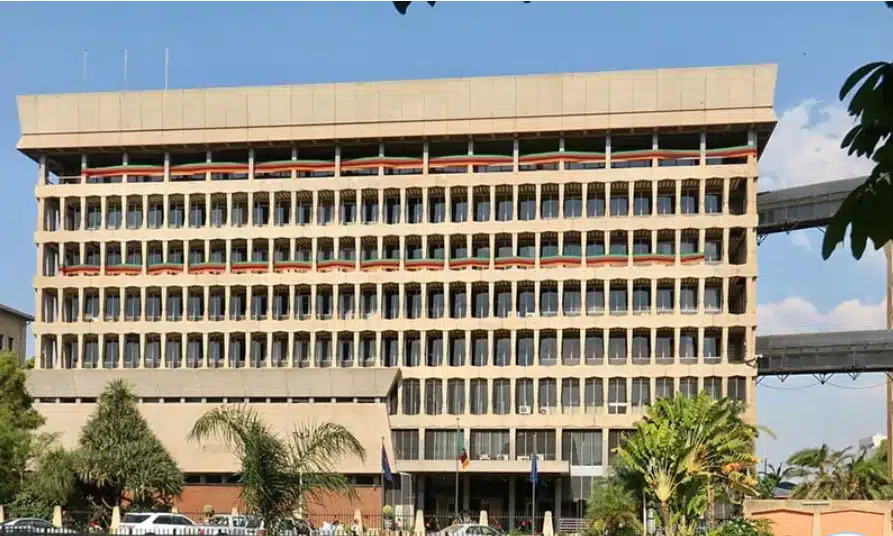
BoZ lowers Statutory Reserve requirement to 21%

Breaking News Zambia
NewsThe Bank of Zambia (BOZ) has announced […]
The Bank of Zambia (BOZ) has announced a reduction in the Statutory Reserve Ratio (SRR) on Kwacha deposits, lowering the requirement from 26% to 21%.
The policy shift, effective 3 August, is aimed at injecting additional liquidity into the banking sector and fostering economic growth. BOZ Governor Dr. Denny Kalyalya revealed the decision during a media briefing at the 98th Agriculture and Commercial Show, describing it as a strategic move to enhance the lending capacity of commercial banks.
Economic analyst Ephron Chilunjika, speaking to the Zambian Business Times (ZBT), characterized the reduction as one of the most impactful monetary policy changes in 2026. “Banks previously had to hold K26 of every K100 deposited with the central bank. With the new SRR, they will retain only K21, releasing an extra K5 per K100 for lending,” Chilunjika explained.
He further noted that this action will allow more funds to circulate in the economy, empowering banks to better support businesses and households without necessitating the creation of new money. Chilunjika attributed the move to improving macroeconomic fundamentals, including declining inflation, a stabilizing Kwacha, robust international reserves currently standing at approximately US$6.7 billion, notable progress on debt restructuring, and increased investor confidence.
“Having spent recent years stabilizing the economy, the Bank of Zambia is now poised to stimulate growth,” Chilunjika said, adding that the additional liquidity could drive lending across key sectors like agriculture, manufacturing, mining, and small enterprises. This, he suggested, could promote job creation and productive investment, though lending standards will remain in place.
Chilunjika emphasized that the reduction in reserve requirements signals the central bank’s confidence in Zambia’s economic stability and readiness for expanded credit activity. He concluded that if banks direct the newfound liquidity toward productive sectors, the measure could significantly accelerate Zambia’s economic recovery.
Article by Justine Phiri





Community Feedback