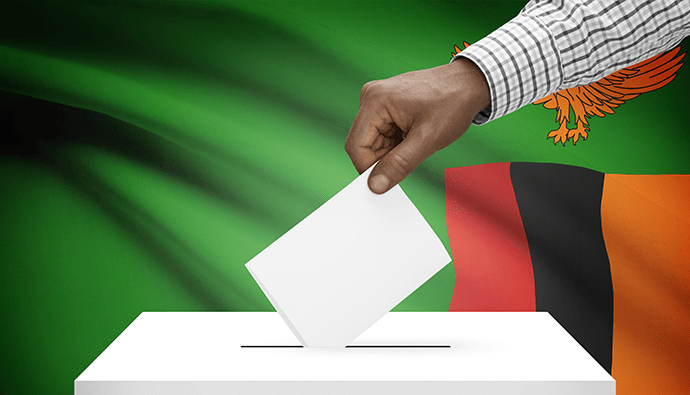
Although Zambians are unpredictable, is there really a wind of change for Govt?

Breaking News Zambia
NewsWith just over a month remaining before […]
With just over a month remaining before Zambians head to the polls for the 2026 general elections, the question on many minds is whether the nation is truly on the cusp of political change.
Despite Zambia’s history of unpredictable electoral outcomes, speculation is rife: will this election see a new government take the reins, or will the status quo prevail? Speaking in an interview with Zambian Business Times – ZBT, Advocates for Democratic Governance Foundation (ADEG) Executive Director, Gideon Musonda, however, said the answer remains difficult because Zambia’s electoral history has repeatedly demonstrated that voters often defy expectations. Musonda stated that while public conversations may create the impression that a particular political direction is emerging, election outcomes are ultimately determined by a much larger group of silent voters whose intentions are rarely known before polling day.
“It’s a challenging question, but one interesting thing that we should take note of is that sometimes elections have gone beyond expectations,” he said. Masonda explained that even during the 2021 elections, many analysts anticipated a much closer contest, with some predicting a second-round presidential vote rather than the decisive outcome that eventually emerged.
“Some of us saw that there would be a change, but not to that extent because we were predicting maybe a second run, but Zambians surprised everyone,” he said. Musonda added that many citizens who eventually determine election results are not necessarily the loudest voices in public spaces, social media debates, buses or political gatherings. “There are more Zambians who turn out to vote who are not appearing in public, and those are the people who usually determine where elections are supposed to go,” he said.
Meanwhile, speaking in a separate interview with Zambian Business Times – ZBT, Caritas Zambia Executive Director, Fr. Gabriel Mapulanga, indicated that while there is evidence of growing political competition, it may be inaccurate to describe the current situation as a full-scale wind of change similar to what Zambia experienced in 2021.
Fr. Mapulanga also observed that some members of the ruling party who may have initially viewed the election as an easy victory are beginning to realize that the contest is becoming more competitive than previously anticipated. “The only thing that can be seen is that those in the ruling party who thought it was just a walkaway thing are waking up to realize that it is not a simple thing and that somebody is trying to get the votes,” he said.
However, Fr. Mapulanga stressed that Zambian voters have become increasingly sophisticated and are no longer easily influenced by campaign spending, gifts or political rhetoric alone. “Zambians can surprise you now because they are very clever and you can give them money, food or anything else, but their decision in the ballot box is very critical,” he said. Fr. Mapulanga added that despite growing political activity by opposition parties, the conditions necessary to create a nationwide wind of change comparable to 2021 may not yet fully exist because opposition forces have had limited time to organize themselves into a formidable electoral alternative.
“The wind of change has moved a lot of people so that they change and vote is not there per se, but what the opposition has managed to do within a short period is still significant and shows that anything can happen between now and polling day,” he said.
Article by Phillip Sinkala
Community Feedback