
A Letter to a Zambian Church Leader

Breaking News Zambia
Top StoriesBy Kapya Kaoma My Dear Fellow Servant, There comes a moment in the life of a nation when true leadership demands sacred, uncompromising courage. Our offices are patterned after the prophets and saints of Sacred Scripture who dared to stand against tyrants. Yet throughout history,…
By Kapya Kaoma
My Dear Fellow Servant,
There comes a moment in the life of a nation when true leadership demands sacred, uncompromising courage. Our offices are patterned after the prophets and saints of Sacred Scripture who dared to stand against tyrants. Yet throughout history, a shadow has stalked our calling: clergy who claim the name of God while quietly serving the forces consuming God’s people. Our mission is defined by the Gospel we proclaim—by the One who called us to take up the cross, not to retreat into the comfortable sanctuaries of modern prestige.
We were called to shepherd God’s flock to protect them from wolves. Scripture warns us: when the flock is scattered and left to perish, God holds the shepherd accountable. The systemic decay in which our nation is caught is not happening in a vacuum; its weight rests upon our shoulders. For too long, we have hidden behind the sanitized statements of church mother bodies—statements our people have long stopped listening to. The flock does not follow press releases; they follow us, individually, from our pulpits and on our phone screens. That is why I address you directly.
Zambia stands at a tipping point. Just look into the faces of our youth: they are hungry, desperate, and burning with rage. Starved of opportunity, they are easily bought for a pittance to turn their hands against their own neighbors. This is more than a political failure; it is a moral catastrophe. The ongoing plunder of our mineral wealth alongside crushing youth unemployment forms a fuse that political slogans cannot extinguish.
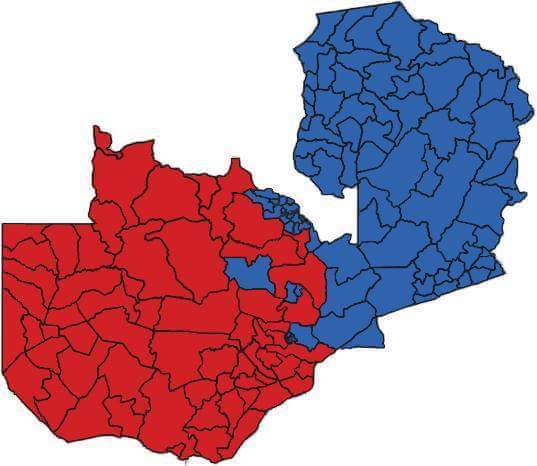
In underdeveloped border regions like Mufumbwe, the ground is already catching fire. When state forces deploy under the premise that local miners bear arms, the risk of full-scale armed escalation becomes immediate. Left unchecked, these mineral-rich lands will inevitably attract foreign warlords and insurgent capital. Compounded by unhealed wounds like the Barotseland question, Zambia risks sliding into devastating civil conflict. Is this the heritage we intend to leave for future generations?
We have coasted for decades on the pride of our peace, but no nation is immune to bloodshed. The human heart remains capable of terrifying violence. The clashes that flare during election cycles can easily be fanned into an inferno that consumes the whole republic; it takes only one sparked spark to turn region against region. Yet we watch in silence as our people are manipulated into viewing democratic competition through a tribal lens.
Frankly, this is not about ethnic identity; it is about individual power. Tribalism is being weaponized to manufacture victimhood and justify the destruction of political rivals. It works because a victim is granted the moral right to self-defense. But exploiting tribal strongholds may secure short-term electoral victories, but it sows long-term ruin. Hyper-partisan hostility has so corrupted the body of Christ that many now prioritize their tribe over their faith. When a believer rejects a brother or sister simply because of his ancestry, we must ask: What remains of our “Christianity”? We have failed our people, and we must repent of what passes for Christian witness in our public square.
Our threats gather both within and without, yet we are afraid of confronting them. Why has there been no moral outcry over the body of the late Hon. Mutotwe Kafwaya being discarded, stripped naked in a morgue? Why did we fail to question the morality of denials that characterized his death by the state? Aren’t we Africans to know the sanctity of burial rites? And why did we look on in silence when the courts were abruptly closed for three days?
When church leaders plead for the release of opposition figures like Mundubile and Makebi, we subtly reinforce the lie that they are guilty simply because the executive says so. How many ruling party cadres brandished weapons during campaigns? How many assaulted officers of the law? Have they answered to justice? And how did president Hichilema know he won the elections from which Mundubile intended to usurp power long before the first vote was cast since the arrests began long before August 13? I believe the law is only just when it is applied without bias. Today, our legal system seems bent to serve a single man: the President. We know this. We murmur in private. Yet we are paralyzed by fear to declare it aloud. Is it not suggestive that the very actions that are treated as treason today were the very tactics utilized when the current administration was in opposition? The statutes have not changed. The judges have not changed. Only the occupant of the high office has changed.
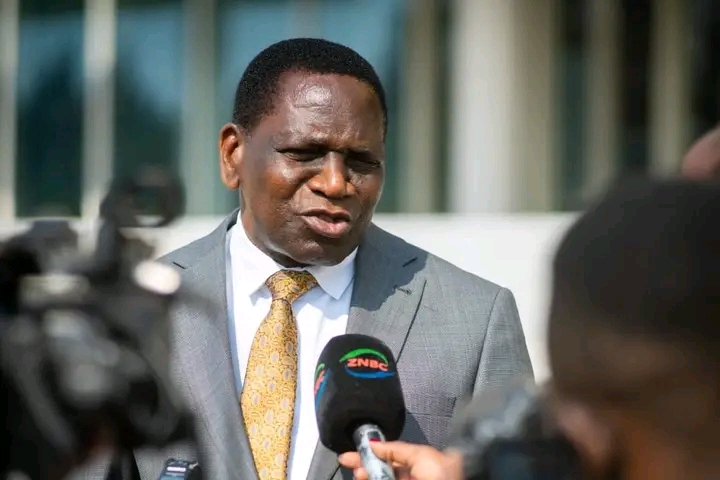
We both know. President Hichilema is a man, not a god. He must remain accountable to the people he governs. Holding constitutional authority is one thing; but exercising it ethically is another. The power to appoint and dismiss military commanders, oversight heads, and judges is not a license to misuse national institutions for political survival. Worse still, to dismantle these pillars is to sabotage the nation’s future.
Since taking office, the President’s reach has repeatedly overstepped constitutional boundaries. We watched with heavy hearts as Constitutional Court judges were purged after ruling against his interests during previous administrations. We looked away as he militarized our recent elections. It is not that we didn’t recognize the danger; rather, like Peter at the trial of Jesus, fear paralyzed our truth—and we stepped back into the shadows as the cock crowed. When will we stand up and demand a judiciary that obeys the Constitution rather than the executive?
Ruling party cadres attack citizens, intimidate police, and disrupt gatherings while the state preaches “peace.” Law enforcement targets the opposition while the military assumes an unprecedented role in civilian life. And how does the Church respond? By calling for “calm” among the victimized.
This is not pastoral care; it is complicity. It is telling authorities that they can oppress with total impunity. This is normalizing state intimidation. We resisted this during the Kaunda era when the state became militarized. Our youth may not remember, but when the president claimed to be “the chief shushushu”—it warned of a vicious reign of terror once characterized Dr. Kaunda, the Mankangala’s era! Kumulu ni Lesa, Panshi ni Kaunda! We were all made to shout. That was the era of the shushushu–Zambians spied on each other to serve the interests of the Almighty KK. Are we walking that dark path again? Are state agencies operating under directives where political opponents are marked for elimination? Today the hammer falls on the opposition; tomorrow it will crush the ruling party’s own dissenters when they are out of power. Yet, the President is a civilician, and NOT the Chief Intelligence Officer. Unless we remind him of this fact, we risk losing more innocent lives.
The military belongs in the barracks, not patrolling public streets. The summary use of force against civilians must end. Misusing soldiers is playing with fire—the military is trained for war, not community policing. We must warn the President: preaching peace while unleashing state force against citizens is an illusion of power. State violence inevitably breeds citizen retaliation. When a people realize the system meant to protect them has become their executioner, self-defense becomes an irresistible call.
Justice and policing are inseparable: properly policed communities receive justice; militarized communities receive tyranny. The judiciary exists to shield the weak from the strong. Even autocratic regimes generally keep court doors open to preserve the illusion of order. Didn’t Jesus speak about the unjust judge giving justice to the persistent widow? To see courthouses closed across the country is a stain upon our nation before the global community. How can the executive expect citizens to respect judicial rulings when the process is so blatantly manipulated? It is like Herod delivering the head of John the Baptist on a platter to appease political convenience. Is this our vision for Zambia—a nation where justice is a favor granted only at the whim of the powerful?
As spiritual leaders, we must demand more than soothing rhetoric from an administration marked by broken promises. We must refuse to allow the Christian faith to function as the opiate of the masses—a pacifier for the broken and a silencer for the oppressed. We must stop allowing the persecuted to be stripped of their dignity in captured courts. Citizens are not rebels for challenging their government; it is their constitutional right. Sacralizing state oppression by preaching passivity while human rights are violated is an insult to the Gospel.
When citizens are unjustly arrested, beaten, and bloodied in broad daylight while others applaud, some demand a “proper theology of protest.” What they mean is quietism—doing nothing so the thrones of power remain undisturbed. Our nation does not need pious, empty prayers offered inside sanctuary walls while the streets burn; such rituals mock God. We must speak with prophetic clarity. We must look past our denominational silos and unite as the body of Christ. Our people do not need pacifying platitudes; they need moral courage. Those languishing in cells are not criminals simply because a president labels them so. Those abusing power are not gods; they are mortals accountable to the law and to God. It falls on us to call them to account.
Our ministry must remain non-partisan, but it can never remain neutral. We have grown comfortable serving the institutions we build—cathedrals that replicate the mansions of politicians. Our calling is planted in the cross—the rugged cross where our Lord bled and died as a victim of state execution and religio-political collusion.
The cross is inherently political. As theologian Evangelical Christopher Wright observed, viewing Jesus as “non-political” is a total misreading of history. The Roman Empire did not execute Jesus because he taught personal piety; they killed Him because His proclamation of the Kingdom of God exposed the illegitimacy of their ultimate authority. When we confess Christ as King of kings, we declare that no president, no party, and no regime holds absolute power. Earthly authority remains entirely subject to the judgment of God. An administration may imprison our bodies, but the Church holds the divine mandate to call thrones to repentance.
This is the baseline of Christian witness: stepping into the public vulnerability of our Lord—a vulnerability present today in the poor, the detained, and the silenced. Ever since Constantine, the Church has been tempted to trade the cross for the throne, bartering its soul for political access. Yet throughout history, God has raised prophets to break that unholy alliance, often at the cost of their lives.
Across Africa, believers have suffered martyrdom for standing against abusive power. On our own soil, those who brought the Gospel faced a choice: stand with the cross or align with the colonial oppressor. Tragically, many chose the oppressor, demanding that Africans remain submissive. The blood shed to liberate Zambia was spilled despite the prayers of complicit clergy who labeled freedom fighters as outlaws. During the UNIP era, a Roman Catholic archbishop died under mysterious circumstances because he dared to be a voice for the voiceless against a regime that sought to supplant God.
Our integrity as religious leaders is under judgment. Throughout Israel’s history, court prophets were bought with royal favors. Today, too many of us have been silenced by access and influence. We have traded the hard word of the cross for executive dinners, selling our birthright for silver—and like Judas, missing the glory of the Holy God. Those silver coins will not save us. Instead of praying to God, we offer public invocations tailored to please the political patrons who control the purse. So it was in the days of Elijah; so it is today.
As magnificent as our church buildings may be, Christ does not live in our brick and mortar. Christ is suffering in underserved compounds left without clean water. Christ is present where young people are exploited while leaders feast in luxury. He is present among political prisoners denied access to a judge or a lawyer. Even Pontius Pilate granted Jesus a formal trial; today, basic legal rights are swept away at the executive’s command. On state occasions, clergy parade alongside officials, acting as human shields for state overreach rather than heralds of Gospel liberation. They repeat the tragic pattern of Maundy Thursday, when religious authorities and imperial officers joined hands to condemn an innocent man to preserve their own status.
The theology of the cross is an act of holy resistance. It exposes the lie of tyranny and demands ethical action against systemic evil. It points to an innocent Man who walked the road to a grave, exposing the bankruptcy of human power. The victim of yesterday is the Risen Lord of today, who has empowered His Church to defend the least of His brothers and sisters.
Theologically, holiness and justice are inseparable. True worship demands righteous action. We see this in the ministry of Jesus, who broke cultural, political, and religious barriers to bring mercy, peace, and truth to the marginalized. If not a single sparrow falls to the ground without your Father’s knowledge, how much more does the blood of those denied justice cry out to Him on our watch?
It was this uncompromising truth that made Jesus an existential threat to earthly powers. When He was arrested, the crowds vanished. His followers fled; some even joined the mob shouting, “Crucify him! We have no king but Caesar!” He stood alone. This remains the brutal reality for political prisoners in our land today—they suffer isolated, mocked, and forgotten. Even religious leaders have forgotten them.
As witnesses to Christ, we cannot abandon the cross. It is our only authority. From the cross, Jesus forged a new community of solidarity: “Woman, behold your son… Son, behold your mother.” The power of the cross exposes the naked deception of political tribalism. We ignore ethnic divisions until election season, only to watch citizens prosecuted for “hate speech” while the elite exploit those same divisions to capture votes. Allowing the lie that regions vote purely by tribe is a failure of our moral and religious leadership. At the cross, tribal divisions collapse, leaving only the truth of our shared identity in Christ.
We face an unavoidable choice: uphold a corrupt status quo or bear witness to the truth. Too often, we become silent partners to injustice, watching Christ suffer in the person of the oppressed while we offer polite prayers for the oppressor. We urge the weak to submit, but fail to call the strong to repent.
Where is the spirit of Moses demanding from Pharaoh, “Let my people go”? Where is the spirit of Samuel declaring to Saul, “The Lord has rejected your rule”? Where is the spirit of Nathan standing before David, “You are the man”? As Jesus reminded Pilate, no ruler holds authority except that which is given from above. No president is above the law of God or the law of the land.
The cross is God’s protest against human cruelty, and the Resurrection is His promise that tyranny has an expiration date. A third day is coming—a day when fear loses its grip, and when bars, chains, and state power can no longer suppress the truth.
Let us reclaim the prophetic fire of our calling. We are servants of the cross, and it is from the cross that our strength flows. It is a severe indictment of our witness when secular civic groups show more courage against executive overreach than the Church of Jesus Christ. There is no neutrality in the face of oppression. The Church found its voice to speak truth to Dr. Kaunda; we found our voice during the Chiluba administration. We must speak with the same unyielding clarity to President Hichilema today: he is a mortal leader, not a deity. Political opponents do not need presidential mercy; they require impartial justice.
May the cross grant us the fortitude to stand firm, trusting in Christ as our shield. As Apostolic Father Ignatius of Antioch on his way to execution reminded us: “When Christianity is under attack, grand words are of no use—only grand actions.”
Let us move beyond rhetoric into principled, dangerous obedience. May God grant us the courage of the cross.
Many will condemn this message. But I do not fear their condemnation. I fear only the judgment of God if I remain silent.



Community Feedback