Zambia : UPND Alliance Spars UN Human Rights Report

Breaking News Zambia
NewsLusaka - Zambia: Miti sought to reframe the UPND administration's record affirmatively, describing it as a law-abiding government that has elevated respect
Headlines 4 min.Read UPND Alliance Spars UN Human Rights Report By Lusaka Times Editor September 6, 2026 FacebookTwitterPinterestWhatsAppA government publicly disputing the findings of a United Nations human rights mandate holder is not, in ordinary circumstances, a routine political exchange. It is a moment in which a state stakes its own credibility against that of an international system built specifically to scrutinise governments during periods of political stress. That is precisely the position Zambia now occupies.
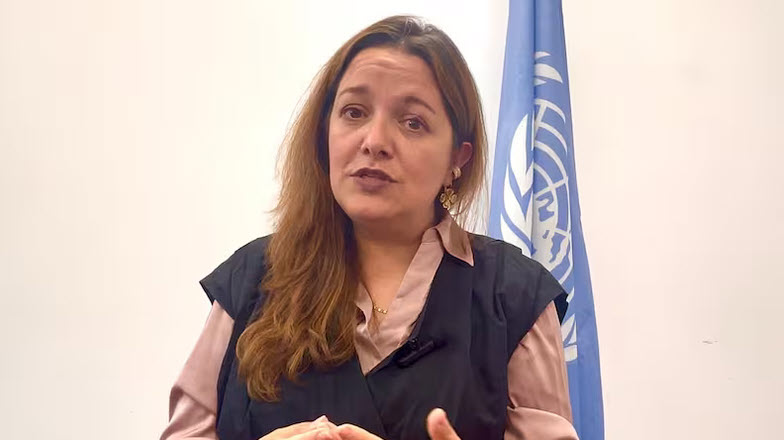
United Party for National Development Alliance spokesperson Edmond Miti has rejected a statement issued by UN Special Rapporteur on the rights to freedom of peaceful assembly and association, Gina Romero, calling it hasty, inaccurate and one-sided. Romero had called on Zambian authorities to release political detainees and restore democratic accountability, a statement made against the backdrop of events that have already claimed one life and placed a former presidential candidate and his running mate in detention on treason-related charges.
What is actually being disputed
Miti’s rebuttal is not a minor clarification. He accused Romero of presenting unverified allegations as settled fact, and of containing significant errors of law. His central argument rests on a distinction he insists must hold regardless of political rank: “Being an opposition leader or a political figure does not place anyone above the law, nor does it transform a criminal suspect into a political detainee,” he said.
That distinction, however, sits at the heart of why UN Special Procedures exist in the first place. Special Rapporteurs are appointed precisely because national governments, when accused of political persecution, are not considered neutral arbiters of whether their own conduct amounts to persecution or legitimate law enforcement. Miti’s insistence that allegations of treason must be tested by independent courts is, in the abstract, unremarkable. What makes it significant here is the context in which it is being asserted: a former Cabinet minister and sitting MP is dead following a raid conducted during live vote counting, his death denied by the state for five days until a habeas corpus filing forced disclosure, and the two men now facing treason charges were present at that raid.
The government’s defence
Miti sought to reframe the UPND administration’s record affirmatively, describing it as a law-abiding government that has elevated respect for human rights to unprecedented levels. He pointed to the abolition of the death penalty and changes to public order practices as evidence that reform in Zambia is substantive rather than rhetorical, and cautioned the international community against confusing legitimate criminal investigations with political witch-hunts.
He drew a deliberate contrast between Romero’s approach and that of a separate UN figure, the Secretary-General’s own Special Envoy, who Miti said engaged constructively on the ground in Zambia rather than issuing judgment from a distance. According to Miti, it was this envoy who facilitated the handover of opposition leaders to security agencies, operating on explicit assurances that their fundamental rights would be respected, a commitment he said the Zambian government continues to honour.
That claim of continued protection sits uneasily alongside separate, corroborated reporting that the detained opposition figures have faced severe restrictions on legal and family access at Mukobeko Maximum Correctional Facility, and reports that they have twice refused prison-supplied food amid unresolved concerns over their safety. Whether those restrictions are consistent with the assurances Miti describes is a question his statement does not address.
Sovereignty versus scrutiny
Miti’s legal argument leans heavily on the principle of non-interference. “Under international law, the mandate of UN Special Procedures requires strict adherence to objectivity, impartiality and non-interference in the internal affairs of sovereign states,” he said, arguing that Romero failed to meet this standard by operating from a distance without thorough local verification and without adequately incorporating input from Zambian authorities.
This is a genuine and long-standing tension within international human rights law: sovereign states retain the right to conduct their own criminal justice processes, while UN mandate holders retain the right, indeed the obligation, to scrutinise those processes when credible concerns arise about politically motivated detention. Neither principle automatically overrides the other, and disputes of exactly this kind, a state insisting on non-interference, a rapporteur insisting on independent scrutiny, have historically been resolved only through sustained international pressure, further investigation or, in some cases, neither, leaving the underlying facts contested indefinitely.
Why this matters beyond the statement itself
Miti closed by describing Zambia as a committed constitutional democracy, open to fair scrutiny but grounded in mutual respect and national sovereignty. That description will now be tested against events that are, for the most part, no longer in serious factual dispute: a sitting MP died from gunshot wounds during a state security operation; his death was not acknowledged for five days; two senior opposition figures remain detained on charges connected to that same raid; and questions about their access to legal counsel, family visits and safe food remain unresolved more than a week into their detention.
The dispute between the UPND Alliance and the UN Special Rapporteur is, in that sense, not merely a disagreement over wording or diplomatic tone. It is a contest over which account of these events, the government’s or the international community’s, will shape how Zambia’s post-election period is remembered and how accountable its institutions are ultimately held to be.
Loading read count...LEAVE A REPLY Cancel reply
Hot this week
ColumnsDeath of Constitutionalism — How August 13 Marked a Turning Point for Zambia’s Democracy September 6, 2026 1 Death of Constitutionalism — How August 13 Marked a... Headlines
Mundubile, Makebi on Hunger Strike? September 6, 2026 1 Uncertainty over what is happening inside Mukobeko Maximum Correctional... Headlines
Release Mundubile, Makebi, Demands Kalaba September 6, 2026 2 A widening rift between political rhetoric and judicial practice... Sports
Power lose Champions League opener September 5, 2026 0 Zambian champions Power Dynamos have launched their CAF Champions... Sports
Arrows makes CAF Cup winning start September 5, 2026 1 Red Arrows have made a winning start to their...
Topics
ColumnsDeath of Constitutionalism — How August 13 Marked a Turning Point for Zambia’s Democracy 1 Death of Constitutionalism — How August 13 Marked a... Headlines
Mundubile, Makebi on Hunger Strike? 1 Uncertainty over what is happening inside Mukobeko Maximum Correctional... Headlines
Release Mundubile, Makebi, Demands Kalaba 2 A widening rift between political rhetoric and judicial practice... Sports
Power lose Champions League opener 0 Zambian champions Power Dynamos have launched their CAF Champions... Sports
Arrows makes CAF Cup winning start 1 Red Arrows have made a winning start to their... Feature Politics
ECZ Says Two Parties Qualify for Proportional Seats 0 The Electoral Commission of Zambia (ECZ) says only two... General News
Army Commander Praises Troops for Professionalism 0 Zambia Army Commander Lieutenant General Geoffrey Zyeele has commended... General News
Govt to Build New Petroleum Refinery at $1.2 Billion 2 Government plans to build a new petroleum refinery next...
Related Articles
Mundubile, Makebi on Hunger Strike?
Headlines September 6, 2026Release Mundubile, Makebi, Demands Kalaba Headlines September 6, 2026
US Congressman Demands Release Of Zambia Poll Results
Headlines September 5, 2026Mundubile, Zulu Remain in Mukobeko as Treason Case Proceeds
Headlines September 4, 2026HRC Presses Police, Prosecutors to Charge or Release 84 Election Detainees
Headlines September 4, 2026Popular Categories
HeadlinesGeneral NewsSportsEconomyRural NewsColumnsFeature Politics Previous articleDeath of Constitutionalism — How August 13 Marked a Turning Point for Zambia’s Democracy




Community Feedback