
Zambia : The Cost Of Silence: How Zambia Walked Into The Crisis Of 2026

Breaking News Zambia
NewsLusaka - Zambia: The cost of silence: how Zambia walked into the crisis of 2026
ColumnsFeature Column 16 min.Read The cost of silence: how Zambia walked into the crisis of 2026 By Moses Musokotwane September 27, 2026 FacebookTwitterPinterestWhatsAppThe cost of silence: how Zambia walked into the crisis of 2026
Democratic decline rarely arrives in a single dramatic moment. It comes gradually, when actions that once seemed exceptional become normal, and when citizens begin treating the rights of political opponents as somebody else’s problem. Democracy is not protected only when our own side is under attack. Its real test comes when we are prepared to defend the rights of people with whom we disagree.
Zambians, we need to talk. There is something very important we are missing about the crisis our country finds itself in today. We did not just land here. We did not wake up after the 2026 election and suddenly discover that something had gone terribly wrong with our democracy.
No. This has been coming. It has been building slowly, one incident after another, one institution after another, one boundary after another. And every time the boundary moved, Zambia adjusted.
We complained for a few days. We fought it out on Facebook and discussed it on the radio. Then we moved on, and the Government learned something from our silence: that Zambia would always move on. That is how we got here.
Go back to 2021. Edgar Lungu lost an election, conceded and handed over power peacefully. Whatever you thought of him, that moment strengthened Zambia. Power changed hands with no soldiers, no refusal to leave State House and no constitutional crisis. One president handed over to another, and that was the Zambia we inherited in 2021.
But look at what happened afterwards. Bowman Lusambo and Joseph Malanji had their parliamentary seats taken from them through the institutions of Parliament and the judiciary. Remember Ronald Chitotela? Concocted criminal cases, one after another. Because these were PF politicians, many Zambians convinced themselves that this was simply the PF suffering the consequences of losing power.
So we stayed quiet. Some even celebrated. But we missed the bigger questions. What was happening to our institutions? What precedents were being set?
Democracy is not tested by how a government treats its friends. It is tested by how a government treats its opponents. The rights of your political opponent are also your own rights. The institution you allow to be abused today against somebody you dislike may be the very institution you will need tomorrow, when the Government comes for somebody you love.
We did not see it that way. We said: that is Bowman, that is Malanji, that is Chitotela, that is PF. And we moved on.
Then opposition rallies became almost impossible to hold. Police stopped meetings, roads were blocked and political gatherings were cancelled. In a multi-party democracy, an opposition party increasingly had to negotiate with the police simply to speak to the people it wished to govern. Again, Zambia adjusted. We normalised it.
Then came the cyber laws, and we were warned. Lawyers warned us. Civil society warned us. Journalists warned us. They said these laws were dangerous, that the powers they created could and would be abused, and that they could become an instrument for controlling speech.
Many Zambians simply replied: if you have done nothing wrong, what are you afraid of? Again, we missed the point. The question was never whether President Hakainde Hichilema would personally sit somewhere reading your WhatsApp messages and decide that you were guilty.
The question was how much power we were comfortable giving the State over the speech of its citizens. How much power? Governments change and presidents change, but the powers handed to the State remain.
Then came Bill 7, and it was the Constitutional Court itself that raised the alarm. Not the PF, not Mundubile, not Makebi, not some opposition blogger: the Constitutional Court. It found that the process undertaken was inconsistent with the spirit of the Constitution and required wider consultation.
That should have been a major constitutional moment for this country. When the Constitutional Court speaks about the Constitution, the Government is supposed to listen. But we all know what happened. Somehow the political process found its way around the obstacle. Bill 7 was retained, the vote happened in Parliament, Bill 7 became law, and again Zambia moved on.
Somewhere along this road, something else happened that I believe Zambia will one day look back on and ask: why did we allow this? Mwangala Zaloumis was appointed chairperson of the Electoral Commission of Zambia (ECZ).
Concerns were raised immediately. This was somebody who had previously acted as Hakainde Hichilema‘s lawyer, so there was a relationship there. Opposition MPs raised concerns about links to the UPND. People questioned the political associations surrounding appointments to the very institution that would eventually referee an election involving Hakainde Hichilema. And again, Zambia moved on.
But think about this. Forget the UPND. Forget the opposition. Forget Hakainde Hichilema. Forget Mwangala Zaloumis. Let us just use common sense: you cannot have a referee who supports one of the teams.
It does not matter how qualified the referee is. It does not matter how professional he promises to be. The moment a referee walks onto the field carrying the history and associations of one of the competitors, confidence in the match is already damaged.
Imagine Zambia playing a World Cup qualifier where the referee previously worked for the opposing coach. Would we wait until the 89th minute, when he awards a penalty, before raising the question? Of course not. We would say: we know this man, he worked for that coach, he cannot referee this game. We would demand a change of referee before kick-off.
We would not do it because we had proved he was going to cheat. We would do it because the integrity of the competition requires a referee whose independence cannot reasonably be questioned. That is how serious institutions protect themselves, and the ECZ should have been protected from even the appearance of political allegiance.
We failed to do that with the ECZ and Mwangala Zaloumis. Four years later, that same institution was refereeing the most consequential election in our country’s history. We were warned. Again, we moved on.
Then there was Edgar Lungu, and this is another place where our politics blinded us. He had lost an election and handed over power. He was no longer president, but he was still a former Head of State. And we watched the State humiliate him again and again.
There was a time when a former president of this country could not even go jogging without the police becoming involved. Imagine that. A man who had commanded the armed forces of this Republic, who had occupied State House and who had handed over power peacefully, could not go for a jog. He could not step out of his house.
We found ourselves watching a dispute over whether Edgar Lungu could go jogging, and some Zambians laughed because they did not like him. Then came the disputes over his movements and his travel. Even his attempt to get medical care outside the country became another point of confrontation. How petty. How petty.
And again, people said: that is Lungu, that is the PF, that is their problem.
Then his wife was arrested. Former First Lady Esther Lungu, a woman who had occupied State House as First Lady of this country, found herself locked up. It arose from what was presented as a family property dispute, one in which she maintains she was herself the aggrieved party. Somehow the State, the UPND, whoever was in charge, found it necessary to make her the victim.
Again, many Zambians stayed quiet because it was Esther Lungu, because it was the Lungu family, because it was PF. That is where we fail to understand something fundamental.
You do not defend somebody’s rights because you like them. You defend their rights because they are rights. Otherwise they are not rights; they are favours, and favours disappear when the wrong person comes to power. The Bill of Rights is not a list of favours. It is a list of rights.
When Edgar Lungu died, you would think death would finally end this political war. It did not. The man died in South Africa, leaving a widow, children and a grieving family.
Instead of allowing that family to bury their husband, father, brother and relative, the full might of the Zambian State sued the widow in the courts of a foreign country. Imagine that for a moment. The Government fought the family over the remains of Edgar Lungu for more than a year. And even when it lost the case, it refused to pay the costs.
Forget the politics for a moment. A woman loses her husband and then spends more than a year fighting the government of her own country, in a foreign court, over his body. If you think that is normal, if you can find a way to justify it, you need to be checked. Where was our humanity? Where was Zambia? Where were our voices?
Some people celebrated because the dead man was Edgar Lungu. Others simply looked away. And again, the boundaries moved.
This is the pattern I want you to see: every time the boundary moves, the people warning us are dismissed. Brian Mundubile spoke. Makebi Zulu spoke. Munir Zulu spoke. Celestine Mukandila spoke. Jay Jay Banda spoke. Raphael Nakacinda spoke. Others spoke.
And what happened? One after another, they became enemies of the State: troublemakers, threats to the UPND, people who needed to be arrested and silenced. Today they sit in prison alongside hundreds of others, merely for speaking out and exercising their rights. So perhaps Zambia needs to ask herself whether these people were really the problem, or whether some of them were warning us about the problem.
Then came the 2026 election, and suddenly all the things we had treated as separate incidents began to come together. I hope that one day we go to our colleagues in prison and say: you warned us.
The referee we had questioned was now refereeing the match. The opposition had been restricted by the police and the system for years, struggling even to hold rallies, and now it had to campaign for national power. The cyber security machinery we had warned against was now in place, and the constitutional boundaries we had watched being pushed had already moved.
The political opponents arrested over the years had already taught Zambia what would happen to dissenters. They were made an example: you speak, we lock you up.
When the August 2026 election came, we saw opposition campaigns blocked. We experienced it ourselves; I was there. Roads were blocked, police followed us, rallies were stopped, meetings were disrupted and people were arrested. Ruling party violence reached even the police, with an officer hacked on the head by a ruling party cadre. And Zambia kept moving.
Then came election day. Counting was suspended for more than two hours, and then the military took over polling stations. Next came the raids on Brian Mundubile‘s home and on our offices; some of you may have seen that they raided our offices in Ibex Hill. Then innocent people were arrested, among them Bishop Trevor Mwamba and Dr Emmanuel Nkoma.
Then came Honourable Mutotwe Kafwaya. For me, 14 August 2026 is the night democracy died, because when Mutotwe Kafwaya was killed, something fundamental changed.
This was no longer Bowman Lusambo‘s parliamentary seat. It was no longer Edgar Lungu‘s jogging, an opposition rally being cancelled, or somebody being arrested for something they had said. This was much deeper. A man was dead. A former government minister was killed in cold blood, murdered during what was called a security operation at the home of Brian Mundubile, the principal opposition presidential candidate, in the middle of an election dispute.
Armed soldiers descended on Mr Mundubile‘s home and faced no armed resistance at all. They subdued everyone in the yard and went up the stairs to the master bedroom. There they found Mutotwe Kafwaya taking cover in the wardrobe, unarmed. They shot him in the chest, and he was pronounced dead.
Then came the cover story: militias, an insurrection, threats to national security, all the flamboyant security language they could find. On the strength of that militia story, which UN Special Rapporteur Gina Romero has described as concocted, Brian Mundubile and Makebi Zulu were arrested and charged with treason.
For me, what happened that night was a coup d’état against our democracy, and I choose my words very carefully. I am not talking about the old-fashioned African coup, where soldiers appear on television and announce that they have taken over the government. These ones were clever. I am talking about a coup against the democratic process itself.
What is democracy? It is elections, institutions and courts. It is the right to change, the right to organise, the right to disagree and the right to seek legal remedy when you believe something has gone wrong.
So what happens when the electoral process fails, and the judicial process meant to correct it also becomes inaccessible? What happens when the courts are surrounded at the very moment citizens need them? What happens when the opposition candidate who should be challenging the result ends up in prison, accused of treason?
And what happens when his running mate ends up in prison with him, even though he was not at the scene of the alleged militia and nothing connects him to it? What do Zambians do?
We stop examining each incident separately and finally look at the complete picture. Let us try that. Let us stop looking at these events one by one. That is my case: August 2026 was not the beginning. August 2026 was the consequence. It did not suddenly arrive. We walked here.
The funeral. Celestine Mukandila. The campaign restrictions. The military. Treason. One incident after another, all painting a single picture that is painful to reflect on. And every time something happened, Zambians found a reason to remain silent.
That is the opposition. That is Lungu. That is politics. Maybe he said something wrong. Let the courts decide. The Government knows what it is doing. Until eventually we arrived here. That is how we got here.
So the question today is no longer simply how we got here. I think we know. We got here through silence, by being quiet, by not speaking when we should have spoken. The question now is what more will be done on the back of our silence.
That is what frightens me. If this much became possible while Zambia was quiet, what becomes possible if Zambia stays quiet? What is the next boundary? The next institution? Who is the next person? What will we normalise next? That is the big question.
This is where I want to speak directly to Zambians. Speaking does not mean insulting anybody. It does not mean lying, threatening anybody or turning to violence. Speaking simply means airing genuinely held views. It means telling those in power: I disagree. I am concerned. Explain this. Show us the evidence.
Speaking means telling them to respect the Constitution, the courts and our rights. It means telling them to release the people they are holding unlawfully and to give people due process. Let political parties organise. Let journalists work. Let citizens question power. That is not rebellion. That is not resistance. That is citizenship.
I think we have reached the point where Zambians must stop defending democracy according to political colours. If somebody’s rights are violated, do not first ask which party they belong to or what tribe they are. If an opposition rally is stopped, do not first ask whether you support that party. If somebody is arrested for expressing an opinion, do not first ask whether you agree with it.
That is the lesson in democracy this country needs. What we must ask is whether what is happening is right. Today it may be Brian Mundubile; tomorrow it may be somebody you support. Today it may be Makebi Zulu; tomorrow it may be you.
That is why I am saying something even to my own colleagues in the opposition. For now, put the parties aside. There will be time for party politics, but first we have a country to defend and a democracy to defend. What is the point of fighting over who gets to live in a house whose foundation is broken? The foundation comes first.
There is a verse I like in the Bible that asks: when the foundations are destroyed, what can the righteous do? Zambia’s foundations are cracked right now, and that foundation is our democracy.
We must first defend the electoral process, the judiciary, freedom of expression, political competition and the right to disagree. We must defend the principle that no president, no government and no political party is bigger than Zambia. When that foundation is secure, then let us fight politically. That is democracy.
I do not want a Zambia where my candidate can never lose. I want a Zambia where my candidate can lose and I can believe he genuinely lost. I want a Zambia where the UPND can lose and peacefully hand over power, and where the opposition can lose and remain free to organise. That is the Zambia we must strive for.
I want a Zambia where an opposition leader can criticise the President today and still sleep in his own bed tonight. I want a Zambia where a journalist can ask a difficult question without wondering whether somebody will knock on the door. I want a Zambia where a citizen can say, “Mr President, I think you are wrong,” and wake up free the next morning, and where a civil servant can support whoever they want without anyone coming after them.
That is not asking for too much. That is the Zambia we are supposed to be: tolerant and united. And we will not recover that Zambia through silence.
So I challenge you: speak. Peacefully, responsibly and truthfully, but speak. Speak because you understand what is at stake. Speak because democracy cannot defend itself, and institutions cannot defend themselves when the citizens who own them have surrendered their voices.
Do not wait until it reaches your house. That is the mistake we have been making: because it was not your son who died, you felt comfortable. When it was Bowman, we waited. When it was Edgar Lungu, we waited. When it was Munir Zulu, we waited. When rallies were being stopped, we waited in silence.
When people warned about the ECZ, we waited. When people warned about the cyber laws, we waited in submissive silence. When people warned about Bill 7, we rested on our laurels and waited like little men and women.
And now Brian Mundubile and Makebi Zulu are in prison facing treason charges, and Mutotwe Kafwaya is dead and buried, six feet under. So tell me, what exactly are we waiting for now? That, my fellow Zambians, is the question.
No foreign country is coming to build our democracy for us. No international organisation can substitute for the voice of the Zambian people, and no politician can carry this responsibility alone. Zambia belongs to Zambians. If we believe something has gone terribly wrong in our democracy, then Zambians must say so: not violently, not recklessly, but clearly and together.
This is bigger than any of us. Presidents will come and go. Political parties will rise and fall. Those of us holding political positions today will one day be gone. But Zambia will remain, and what kind of Zambia remains will depend partly on what this generation is prepared to defend today.
Our parents gave us a multi-party democracy. We cannot be the generation that hands our children something less. This is the moment to find our voices again. We can refuse to be silent.
The question is no longer whether Zambia should have spoken yesterday. Yesterday is gone, and there is no use crying over spilt milk. The question is whether Zambia will speak today. My answer is that Zambia must speak, before the boundaries move again.
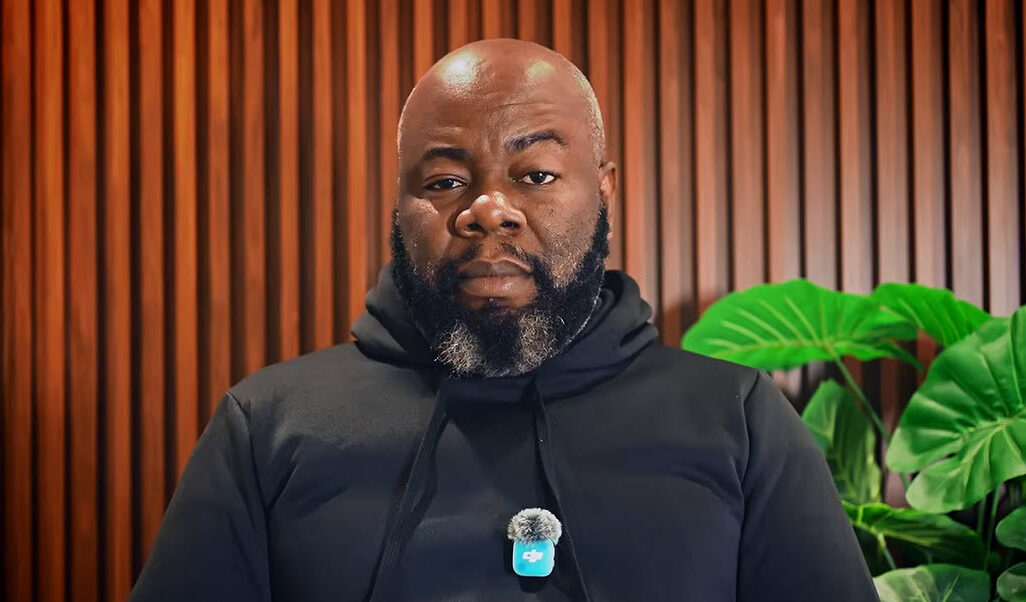
By Brian “Coach” Matambo, Tonse Alliance
Source: “The Cost of Silence: How Zambia Reached the Crisis of 2026”, video address accompanying the documentary “Silence Brought Us Here”
LEAVE A REPLY Cancel reply
Hot this week
HeadlinesMaamba Solar Injects 100MW Into National Grid As El Niño Threatens Hydropower September 27, 2026 0 Maamba Solar Energy Limited (MSEL) has injected 100 megawatts... Headlines
Chief Choongo Condemns Katele Kalumba Over Attack On President Hichilema September 27, 2026 1 Chief Choongo Condemns Katele Kalumba Over Attack On President... Headlines
Harrington Warns UPND Against Removing Presidential Term Limits September 27, 2026 1 Zambians Have Always Rejected Removing Presidential Term Limits, Says... Headlines
Mandevu, Lumezi North And Mbala Return To The Polls On 5 November September 27, 2026 0 Voters in Mandevu and Lumezi North will elect Members... Headlines
Lusaka Catholics Called To Cathedral As Archbishop Banda Answers Fresh DEC Summons September 27, 2026 4 The Catholic Archdiocese of Lusaka has called its clergy...
Topics
HeadlinesMaamba Solar Injects 100MW Into National Grid As El Niño Threatens Hydropower 0 Maamba Solar Energy Limited (MSEL) has injected 100 megawatts... Headlines
Chief Choongo Condemns Katele Kalumba Over Attack On President Hichilema 1 Chief Choongo Condemns Katele Kalumba Over Attack On President... Headlines
Harrington Warns UPND Against Removing Presidential Term Limits 1 Zambians Have Always Rejected Removing Presidential Term Limits, Says... Headlines
Mandevu, Lumezi North And Mbala Return To The Polls On 5 November 0 Voters in Mandevu and Lumezi North will elect Members... Headlines
Lusaka Catholics Called To Cathedral As Archbishop Banda Answers Fresh DEC Summons 4 The Catholic Archdiocese of Lusaka has called its clergy... General News
TECH Global University, regarded as the ‘online Harvard’ thanks to its Ivy League faculty 0 TECH Global University, regarded as the 'online Harvard' thanks... General News
Namibian Government eulogizes Lt Gen Zuze 0 The Government of Namibia says it is deeply saddened... General News
Siavonga Police officer Jailed for corruption 0 The Siavonga Subordinate Court has convicted and sentenced a...
Related Articles
Mushimba Warns Against Removing Presidential Term Limits
Columns September 23, 2026The misguided world map debate about Africa Columns September 22, 2026
Ten Years Is Enough: Zambia Should Not Swap Its Term Limit for a Promise of Development
Columns September 21, 2026Government Response to EU Resolution on Post-Election Repression Under Fire
Columns September 21, 2026A word to my traditional cousin Ezra Tembo
Columns September 21, 2026Popular Categories
HeadlinesGeneral NewsSportsEconomyRural NewsColumnsFeature Politics Previous articleMaamba Solar Injects 100MW Into National Grid As El Niño Threatens Hydropower


Community Feedback