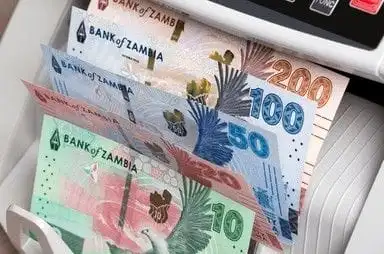
Why K100 Feels Like K20 These Days

Breaking News Zambia
NewsThere was a time when walking around with K100 in your pocket felt like you had enough money to get several things done. Today, many Zambians can spend K100 and wonder where the money went. A quick meal. Transport. A drink. A few groceries. A mobile-money transaction. Before you know it, the K100 is gone. […]
There was a time when walking around with K100 in your pocket felt like you had enough money to get several things done.
Today, many Zambians can spend K100 and wonder where the money went.
A quick meal.
Transport.
A drink.
A few groceries.
A mobile-money transaction.
Before you know it, the K100 is gone.
This is why the common statement that “K100 now feels like K20” has become a relatable description of the cost-of-living experience.
The reality is that the purchasing power of money depends on the prices of the goods and services people need.
When prices rise, the same amount of money buys fewer things.
For households in Lusaka, the pressure remains significant.
The Jesuit Centre for Theological Reflection reported that its Basic Needs and Nutrition Basket for a family of five in Lusaka reached K12,112.88 in June 2026, up from K11,763.38 a year earlier. The figure had also increased by K747.88 from January to June 2026.
Looking for the latest sports odds and markets? Check them out here.
This helps explain why many households continue to feel financial pressure even when some broader economic indicators improve.
The challenge is that income does not always increase at the same speed as household expenses.
A worker may receive the same salary but discover that transport, food, electricity, school requirements and other everyday expenses consume a larger share of it.
Small purchases are particularly dangerous.
Spending K20 here and K30 there does not appear significant when considered individually.
But repeated every day, these expenses can add up to hundreds or even thousands of kwacha every month.
For example, buying snacks or takeaway food during working hours may seem insignificant.
But if someone spends K40 every working day, that can amount to roughly K800 over 20 working days.
Transport is another major expense.
A person may budget for rent and food while underestimating the amount spent travelling to work, school, business appointments or social events.
Then there are unexpected expenses.
A phone breaks.
A child needs school materials.
A relative needs assistance.
A medical bill appears.
The carefully prepared monthly budget can suddenly collapse.
This is why financial discipline has become increasingly important for households.
One useful approach is to track spending for an entire month.
Not just rent.
Not just groceries.
Everything.
Write down every payment, including airtime, transport, snacks, mobile-money charges and small impulse purchases.
At the end of the month, the results can be surprising.
Some people discover that their biggest financial problem is not one major expense but dozens of small ones.
The goal is not necessarily to stop spending.
It is to understand where the money is going.
Because K100 may still be K100.
But if prices have increased, its purchasing power may no longer be what it once was.
And that is why the question many Zambians are asking is not simply “How much do I earn?”
It is:
“What can my money actually buy?”


Community Feedback