When culture becomes humiliation: The Dangerous abuse of traditional cousinship

Breaking News Zambia
NewsA funeral is meant to be a place of mourning, reflection and dignity. It should never become a stage for public humiliation disguised as culture. The shocking treatment of North-Western Province Permanent Secretary Colonel Grandson Wishikoti Katambi at a funeral in Solwezi should concern every Zambian, regardless of tribe or political affiliation. If what unfolded […]
A funeral is meant to be a place of mourning, reflection and dignity. It should never become a stage for public humiliation disguised as culture.
The shocking treatment of North-Western Province Permanent Secretary Colonel Grandson Wishikoti Katambi at a funeral in Solwezi should concern every Zambian, regardless of tribe or political affiliation.
If what unfolded is allowed to pass under the banner of “traditional cousinship,” then we risk turning one of Zambia’s most treasured cultural practices into a license for abuse. This is not about opposing tradition. It is about drawing a firm line between culture and cruelty.
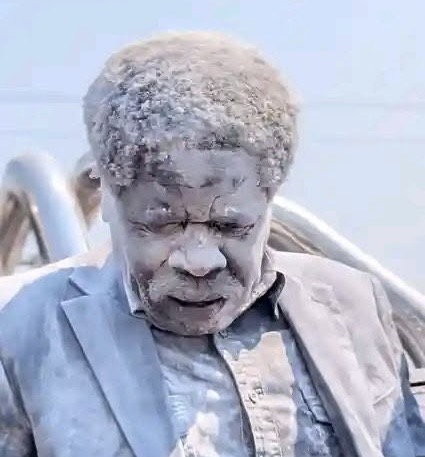
What happened to Colonel Katambi was not harmless cultural play? It was an act of public humiliation.
Did the Permanent Secretary deserve to be engulfed in mountains of powder in the name of traditional cousinship? Absolutely not.
Let us call the incident what it was: an assault on personal dignity, carried out under the convenient cover of a misunderstood and increasingly abused cultural practice.
Traditional cousinship has long been one of Zambia’s greatest instruments of national unity. It exists to strengthen relationships between communities through good-natured teasing, light-hearted interaction and mutual respect. It eases tensions, brings laughter during difficult moments and reinforces social bonds.
But tradition has never been a license to degrade another human being.
There is an unmistakable difference between a symbolic sprinkle of powder exchanged in goodwill and a coordinated act of completely smothering someone from head to toe. One celebrates culture. The other strips away dignity.
Colonel Katambi exercised remarkable restraint throughout the ordeal. Few people would have remained composed after being surrounded, overwhelmed and covered so extensively that they could barely see. His security officers, simply carrying out their duties, were subjected to the same treatment.
What transpired was neither humorous nor traditional. It was malicious, excessive and entirely inconsistent with the values that traditional cousinship is meant to uphold.
The images spoke for themselves. His face was completely covered. Powder was forced into his eyes, nose and mouth. At that point, the incident ceased to be cultural expression and became a serious violation of personal space and human dignity.
The age of some of the perpetrators made the spectacle even more disturbing. Several appeared young enough to be Colonel Katambi’s grandchildren. Respect for elders is itself a cornerstone of African culture. No tradition should encourage younger people to publicly humiliate senior citizens, let alone a senior public servant attending a funeral.
We must also remember that when a Permanent Secretary attends a public function, he does so not merely as an individual but as a representative of the Republic. The office carries the dignity of the State. Respect shown to such an office reflects respect for the institutions that bind our nation together.
When any public official—regardless of political affiliation—is left unable to see, struggling to breathe and publicly embarrassed before mourners, the boundaries of acceptable cultural practice have been decisively crossed.
Colonel Katambi’s record of national service deserves recognition. He served Zambia with distinction in the military and later contributed to regional peace efforts, including work associated with President Frederick Chiluba’s role in the SADC peace initiative for the Democratic Republic of Congo. I had the privilege of covering parts of that peace process as a journalist and witnessed firsthand the calibre of individuals entrusted with such responsibilities.
Such a man deserves honour, not humiliation.
Beyond questions of respect lies an equally serious issue that many appear to overlook: public health.
Large quantities of commercial or raw powder thrown directly into a person’s face are far from harmless. Medical experts have long warned that exposure of the eyes to fine particles can cause severe irritation, corneal abrasions and, in extreme cases, lasting damage to vision.
Forcefully inhaling fine particulate matter can trigger asthma attacks, respiratory distress or other complications, particularly among older individuals or those with underlying health conditions.
No cultural practice should expose people to avoidable health risks.
The incident also raises difficult questions about event management and public order. Where was the funeral committee? Where were those responsible for maintaining decorum? At what point should organisers intervene when cultural expression degenerates into disorder?
Traditional cousinship should never become a shield behind which lawlessness is excused. If such behaviour continues unchecked, there may well be a case for clearer guidelines—and where necessary, legal accountability—when conduct crosses the line into assault or public abuse.
Zambia’s cultural heritage is admired because it promotes harmony, respect and unity. Those values must never be sacrificed in the name of entertainment or misplaced tradition.
Culture is strongest when it protects human dignity—not when it destroys it.
If we truly value our traditions, then we must also be courageous enough to confront those who distort them. Traditional cousinship should unite us, not humiliate us. It should preserve respect, not weaponize ridicule.
What happened in Solwezi should serve as a national wake-up call. Before another person—public official or ordinary citizen—is subjected to similar treatment, we must reclaim the true spirit of our tradi2tions.
Zambia can, and must, do better.
The writer is Former Permanent Secretary (Lusaka Province), Veteran journalist and an academician.





Community Feedback