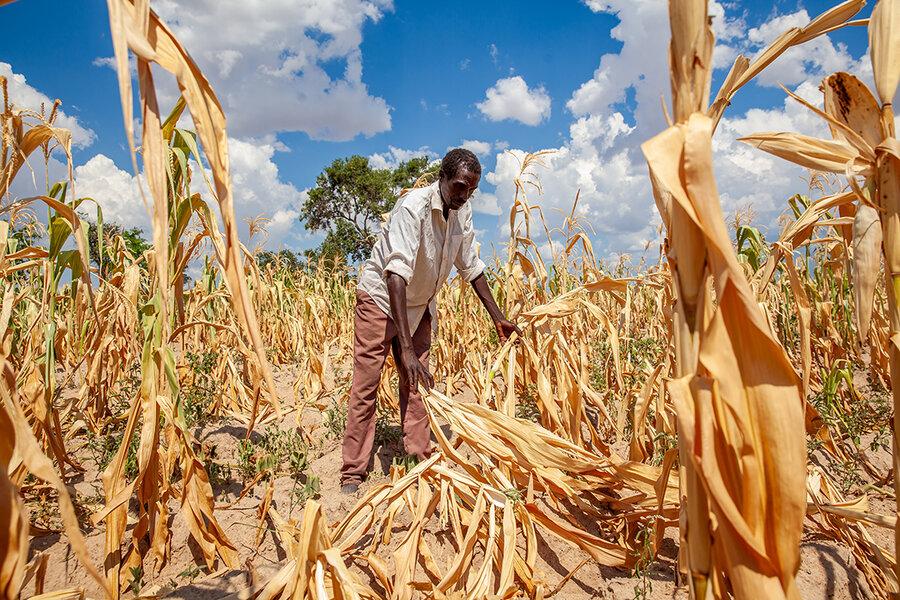
Weather experts warn of a tough farming season as El Niño signals strengthen

Breaking News Zambia
EntertainmentAs Zambia celebrates a projected bumper maize […]
As Zambia celebrates a projected bumper maize harvest for the 2025/2026 agricultural season, meteorological experts are warning that an emerging El Niño weather phenomenon could pose significant risks to future crop production and national food security.
Recently released crop forecast survey results by the Zambia Statistics Agency (ZamStats) and the Ministry of Agriculture projected national maize production at approximately 3.6 million metric tons, with the government setting an ambitious target of 4.9 million metric tons for the upcoming 2025-2026 farming season.
However, Zambia Meteorological Department Senior Meteorologist Victor Bupe says changing global weather patterns linked to climate change are raising concerns over rainfall performance in the next agricultural season. In an interview with Zambian Business Times (ZBT), Bupe said the Zambia Meteorological Department is closely monitoring the possible development of an El Niño event, which has historically been associated with reduced rainfall across Southern Africa, including Zambia.
“An El Niño episode is one phenomenon that we normally monitor through World Meteorological Organization-designated centers. These events usually occur every two to six years, but lately we have seen them becoming more frequent due to climate change and global warming,” Bupe said.
He explained that meteorologists are currently observing warming sea surface temperatures over the Central and Eastern Pacific Ocean, a key indicator associated with El Niño development. “With the current warming of sea surface temperatures above the long-term average, there is an 80 percent confidence that El Niño conditions may occur between May and August, with confidence levels rising to between 95 and 100 percent by December,” he revealed.
Bupe further noted that another global climate driver, the Indian Ocean Dipole, is also being monitored and is projected to shift into a positive phase later in the year. “When both climate drivers are positive, they tend to reinforce each other. Such interaction can lead to delayed onset of the rainfall season, particularly over the southern half of Zambia,” he explained.
He warned that El Niño events have historically resulted in reduced rainfall activity across Zambia, creating uncertainty for the country’s predominantly rain-fed agricultural sector. “El Niño phenomena have been known to reduce rainfall activities over Zambia, and because our agriculture is highly dependent on rainfall, that connection can negatively affect production,” Bupe said.
Despite the growing concern, the meteorologist emphasized that it is still too early to conclusively determine the extent of the impact on Zambia’s maize production and trade outlook. “We are still monitoring the situation.
Around August to early September, the Zambia Meteorological Department will issue a seasonal forecast that will provide a clearer indication of how El Niño is likely to impact the country and which areas may be most affected,” he said.
Bupe urged farmers, agribusiness players, and the public to continuously follow weather updates issued by the department in order to make informed decisions ahead of the next farming season. The possible return of El Niño conditions comes at a critical time when Zambia is seeking to strengthen maize exports, rebuild strategic grain reserves, and stabilize food prices following years of climate-induced production shocks.
Article by Francine Chibuye







Community Feedback