The Zambia Mundubile is Promising

Breaking News Zambia
News🇿🇲 CONTEXT | The Zambia Mundubile is Promising A new public holiday for miners. Thi is the latest addition to what is fast becoming a growing catalogue of promises by NRPUP presidential candidate Brian Mundubile as he continues his campaign across the Copperbelt. Over the past week, every major rally has produced another promise. Some […]
🇿🇲 CONTEXT | The Zambia Mundubile is Promising
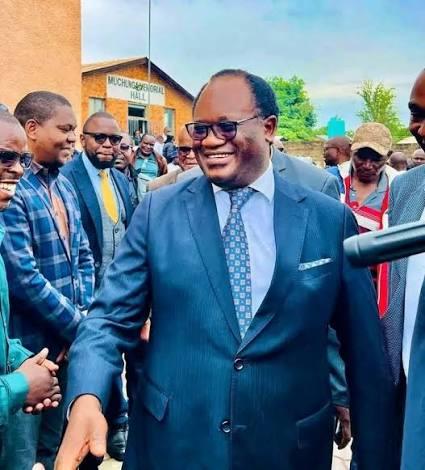
A new public holiday for miners. Thi is the latest addition to what is fast becoming a growing catalogue of promises by NRPUP presidential candidate Brian Mundubile as he continues his campaign across the Copperbelt.
Over the past week, every major rally has produced another promise. Some promise lower prices. Others promise higher incomes. Some revisit old political questions. Others seek to redraw Zambia’s economic landscape altogether. Collectively, they reveal not merely a campaign, but an emerging blueprint of the Zambia the Tonse Alliance says it wants to build.
Every election has its own political language. This one is increasingly becoming the language of desire. The desire for cheaper fuel. Better salaries. More opportunities. Greater access to national resources. Relief from debt. Recognition for miners. For voters, the attraction is obvious.
For economists, policy makers and investors, another question naturally follows. What would it take to turn these promises into government policy?
The latest proposal is symbolic but significant. Mr Mundubile says one of his first decisions in office would be to declare Miners Day a national public holiday, placing Zambia’s mining workforce alongside other nationally recognised professions and commemorations. In a country whose economic fortunes have long risen and fallen with copper and, increasingly, with critical minerals, the proposal is designed to acknowledge the sector that has sustained the Republic for generations.
The campaign’s economic ambitions extend much further. Civil servants have been promised a 30 percent salary increase, one of the largest public sector pay commitments made during this election. It is a promise that speaks directly to household incomes, but also to the arithmetic of government. Higher wages improve purchasing power. They also expand the public wage bill. The obvious question is not whether workers deserve better pay. It is how such an increase would be financed without placing additional strain on the national budget.
Fuel has become another centrepiece of the campaign. Mr Mundubile says pump prices will fall to K10 per litre within his first 100 days in office. It is a pledge made with unusual certainty, reinforced by his public declaration that he would resign if it is not achieved.
Few campaign commitments have carried such a personal guarantee. But fuel prices are shaped by global oil markets, exchange rates, taxes and supply chains. They are influenced as much by international economics as by domestic politics.
The same politics of abundance has reached the farm. Farmers have been urged not to sell maize to the Food Reserve Agency at the current buying price of K347 per 50-kilogram bag, but instead to wait for a Tonse Alliance government, which Mr Mundubile says would purchase maize at K500. Maize dryers have also been promised as part of a wider agricultural support programme. The proposals appeal to producers seeking better returns, but they also invite broader questions about fiscal sustainability, food pricing and market stability.
If government buys grain at a substantially higher price, what eventually happens to the price of mealie meal on the supermarket shelf?
Mining has produced perhaps the campaign’s most debated rhetoric. While addressing youths on the Copperbelt, Mr Mundubile assured supporters they would return to Kikonge and Mufumbwe and that “no soldier will point a gun” at them. For many Zambians, those remarks immediately revived memories of the gold rush that consumed parts of North-Western Province earlier this year before security agencies dismantled what they described as organised illegal mining networks. Kikonge was no ordinary mining settlement. It had evolved into an illicit economy complete with the Swahili Market, the Ukraine Market, armed guards and allegations of foreign syndicates controlling access to mineral wealth.
That history explains why the remarks have generated as much debate in North-Western Province as they have on the Copperbelt. When campaign promises revisit places already etched into the national memory, they inevitably reopen old questions.
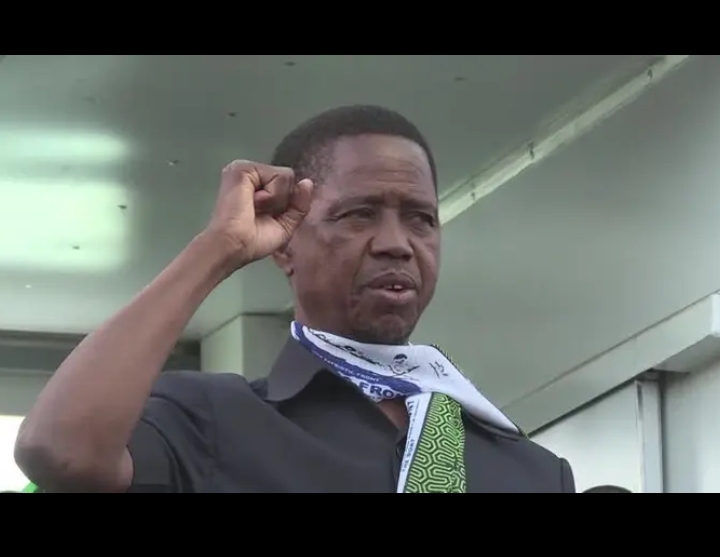
Household finances have not been left behind. Customers with outstanding debts owed to water utility companies have been promised relief through the cancellation of unpaid water bills, another bizarre promise aimed at easing the cost of living. Mining investors have meanwhile been warned against attempting to influence the electoral process, while the campaign has repeatedly pledged to facilitate the return and burial of former President Edgar Lungu if elected.
Taken individually, these are campaign promises. Taken together, they describe something much bigger. They describe a political philosophy built on expansion rather than restraint, intervention rather than caution, and immediate relief rather than gradual adjustment.
Whether that vision represents economic transformation or fiscal overreach is precisely the debate now unfolding across the country.
Campaigns are, by their nature, exercises in hope. They invite citizens to believe that tomorrow can be better than today. But hope alone has never balanced a budget, stabilised a currency or implemented public policy. Between every promise and every outcome lies the discipline of governance.
For that reason, the value of these commitments does not lie only in the applause they receive on the campaign trail. Their greater value lies in the questions they invite.
How will they be funded? How will they be implemented? Which laws would need to change? And what trade-offs would accompany them?
© The People’s Brief | Ollus R. Ndomu


Community Feedback