
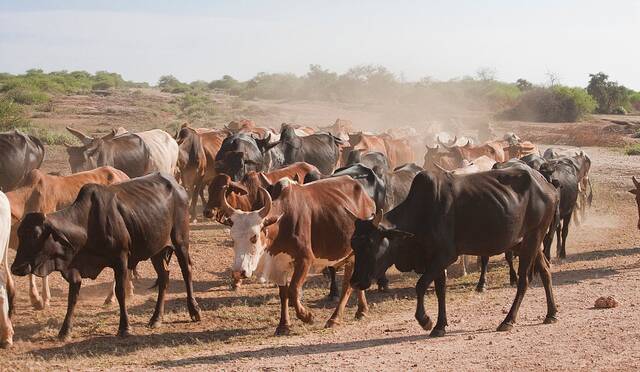
Illegal cattle movement threatens Zambia’s livestock sector

Breaking News Zambia
Trending StoriesThe Ministry of Livestock and Fisheries has […]
The Ministry of Livestock and Fisheries has expressed grave concern over the escalating problem of illegal cattle movements across provincial borders, warning that such activities are exposing Zambia’s livestock sector to significant disease risks and potential economic losses.
Speaking to the Zambian Business Times, Permanent Secretary Dr. Max Choombe highlighted the growing challenge of unauthorized cattle transportation, especially from Western Province into Southern Province, a trend that is undermining national disease control protocols.
Zambia’s livestock sector is a cornerstone of the agricultural economy, providing vital contributions to household incomes, food security, job creation, and the nation’s emerging meat export market. Current estimates indicate that Zambia is home to over 4 million cattle, with Southern and Western provinces comprising a substantial portion of the national herd.
Despite established veterinary checkpoints, unregulated animal movements continue to jeopardize efforts to control the spread of livestock diseases. “The most pressing issue at the moment is the illegal movement of animals, particularly from Western Province deep into Southern Province, reaching districts such as Namwala,” Dr. Choombe stated.
He revealed that enforcement officers have recently intercepted illegally transported cattle, prompting authorities to enforce strict measures under the country’s animal health laws. “Just a few weeks ago, animals bearing brand marks from Western Province were impounded and slaughtered in Namwala District.
In another incident, four cattle originating from Western Province were seized in Kazungula District and disposed of according to the Animal Health Act,” he explained. The government continues to enhance disease surveillance and management efforts, particularly for Foot and Mouth Disease (FMD), a highly contagious viral infection affecting cloven-hoofed animals such as cattle, goats, sheep, and pigs.
Effective control of FMD is vital to safeguarding livestock productivity, farmer livelihoods, and market confidence, both domestically and in export markets. Experts warn that unregulated livestock movement remains a major driver of disease transmission, especially in high-density cattle regions like Southern Province.
Dr. Choombe cautioned that beyond immediate animal health risks, illegal cattle transportation could jeopardize Zambia’s ambitions to expand its livestock exports to regional and international markets.
“We urge farmers and communities to report any suspicious animal movements to the authorities, as livestock diseases carry serious economic consequences for trade and productivity,” he said. Strict enforcement of animal movement controls is essential to protect farmer livelihoods and bolster confidence in Zambia’s livestock value chain.
With government initiatives aimed at commercializing the sector and increasing beef exports, community cooperation will be critical in preventing further disease outbreaks and securing one of the country’s most valuable agricultural assets.
Article by Francine Chibuye




Community Feedback