‘I refuse’: Bishop Sakala rejects label placed on Mutotwe Kafwaya

Breaking News Zambia
News‘I refuse’: Bishop Sakala rejects label placed on Mutotwe Kafwaya Bishop Harrison Sakala has delivered an emotional defence of the late former Cabinet Minister Mutotwe Kafwaya, rejecting what he described as a damaging label associated with the politician in the final days of his life. Lusaka, 29 August – Speaking during Kafwaya’s funeral, Bishop Sakala […]
‘I refuse’: Bishop Sakala rejects label placed on Mutotwe Kafwaya
Bishop Harrison Sakala has delivered an emotional defence of the late former Cabinet Minister Mutotwe Kafwaya, rejecting what he described as a damaging label associated with the politician in the final days of his life.
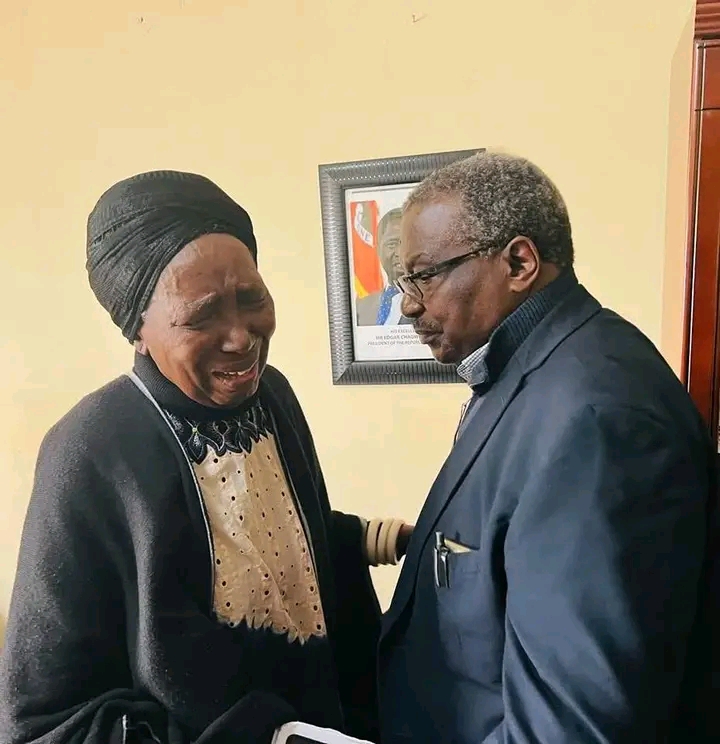
Lusaka, 29 August – Speaking during Kafwaya’s funeral, Bishop Sakala said the description attached to the late politician did not reflect the man he had known personally, insisting that Kafwaya deserved to be remembered for his life and character rather than the allegations or controversy surrounding his death.
“I agree with the wife when she says you did not deserve to die carrying such a label,” Bishop Sakala said.
“Yes, not the Mutotwe Kafwaya I knew. Not the son I have known. Not the person whose life and character I came to know. I REFUSE.”
The bishop’s remarks appeared less a political intervention than an emotional response to the difficulty of reconciling the man he knew with the public image that had emerged around the circumstances of his death.
For Bishop Sakala, Kafwaya was more than a politician whose name had become the subject of public discussion.
He was a son, a friend and, above all, a human being whose life could not be reduced to the circumstances surrounding his final moments.
The comments came as mourners gathered to pay their final respects to Kafwaya, who died at the age of 49, leaving behind family members, friends, political associates and others who knew him during his lifetime.
The funeral offered a brief departure from the political debates that had surrounded Kafwaya, with attention instead turning to the loss suffered by his family and those who had known him personally.
Bishop Sakala’s words reflected the pain of a family and community mourning not only the death of a loved one, but also what they perceived as the burden of having to defend his reputation after his death.
His repeated declaration “I refuse” became the most striking part of his tribute.
It conveyed a determination not to accept a description of Kafwaya that, in his view, contradicted the person he had known.
The bishop argued that the late politician’s final chapter should not erase the life that preceded it.
Kafwaya’s death at 49 brought together people from different parts of his life, including relatives, friends and political colleagues, as mourners remembered his contribution and the relationships he built over the years.
For those gathered at the funeral, the occasion was ultimately about mourning rather than politics.
And Bishop Sakala’s message was clear: Kafwaya should be remembered as a person whose life had meaning to those who knew and loved him, rather than being defined solely by the controversy surrounding his final days.
The bishop’s intervention also underscored the enduring tension that often follows the death of public figures between the public narrative surrounding them and the private memories held by family and friends.
For those closest to Kafwaya, the man they knew existed beyond the headlines.
And as mourners prepared to say their final goodbye, Bishop Sakala sought to ensure that the label associated with Kafwaya’s final chapter did not become the defining account of his life.
“That label? No. Not the Mutotwe Kafwaya I knew… I refuse,” he said.
-Nkanionline 2026 #NewsOnDemand


Community Feedback