
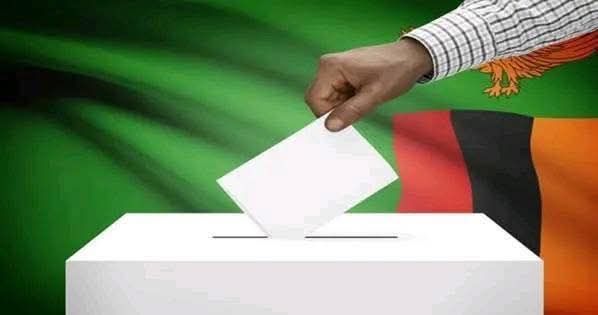
How Zambia’s 10 provinces would determine politics of the day after August 13

Breaking News Zambia
Entertainment125 Views As the campaign trail heats up ahead of the August 13 polls, the politics of the day is beginning to take shape as to the determination of the likely outcome, Zambia uses a “50% + 1” presidential threshold. Apparently, as history has it, no candidate wins without building a coalition of regional strongholds […]
125 ViewsAs the campaign trail heats up ahead of the August 13 polls, the politics of the day is beginning to take shape as to the determination of the likely outcome, Zambia uses a “50% + 1” presidential threshold.
Apparently, as history has it, no candidate wins without building a coalition of regional strongholds swing provinces.
Zambian voters don’t move as a single bloc — they vote on ethnic, urban/rural, economic, and candidate appeal lines.
So elections are won province-by-province.
With 7.02M registered voters in 2021, about 8.8M now, the math is all about where those votes are concentrated.
1. The “Kingmaker” / Battleground Provinces
These have big voter numbers + are not locked to one party. Whoever wins 2-3 of these usually wins the presidency.
Lusaka Province – 1.24M to 1.4M voters
Urban centers are contested. Projected tight: NRPUP 52% vs UPND 47%, or UPND 40% vs Opposition 60%. Urban dissatisfaction on cost of living is the big factor.
Copperbelt Province – 1.02M to 1.2M voters
Historically the “kingmaker” region. Also tight: NRPUP 51% vs UPND 48%, or UPND 45% vs Opposition 55%. Labor issues + mining towns like Solwezi spillover matter.
Central Province – 666K to 825K voters*
Very close: UPND 52% vs NRPUP 47%. A swing of just a few points here changes the national tally.
Eastern Province – 896K to 1.1M voters*
Historically swings. NRPUP projected 51-55% vs UPND 45-49%. PF defections to UPND are a factor.
Together, Lusaka + Copperbelt = 2.27M voters. Eastern + Luapula + Muchinga + Northern = 2.47M voters. That’s ∼4.7M voters = the election.
2. UPND Stronghold Provinces
These deliver big margins for UPND and are seen as “almost assured” wins.
1. Southern Province – UPND 80% vs Opposition 20%. Polls put UPND at 74%. 782K voters. This is HH’s home base.
2. Western Province – UPND 80%. Polls: 68%. 447K voters. Opposition structures weak.
3. North-Western Province – UPND 65% vs 35%. Polls: 66%. 386K voters. Mining towns can add opposition spillover.
Combined UPND strongholds = 2.28M voters. In 2021 conditions that was ∼2.09M votes. If turnout/share drops 20%, it falls to ∼1.67M, forcing UPND to find ∼1.45M more votes outside its base.
3. Opposition-Leaning Provinces
These are where the Tonse Alliance/NRPUP under Brian Mundubile is projected strongest.
1. Luapula Province – Opposition 65% vs UPND 35%. Polls: NRPUP 76%. 567K voters. Very volatile, locally driven.
2. Northern Province – Opposition 55% vs UPND 45%. 606K voters. UPND has struggled with local grievances.
3. Muchinga Province – 401K voters. Grouped with opposition bloc.
*How this plays out for 2026*
UPND’s path: Hold Southern, Western, North-Western at ∼70%+. Win Central. Get 45-48% in Lusaka + Copperbelt to stay competitive. Reduce losses in Eastern/Northern/Luapula to 40%+.
Opposition’s path: Consolidate Eastern, Luapula, Muchinga, Northern. Take 55-60% of Lusaka + Copperbelt = ∼1.2-1.3M votes. Limit UPND in Central/Western to 30-40%.
X-Factor: Delimitation
70 new constituencies were added, taking seats from 156 to 226. Analysis shows 5 of 7 new Copperbelt seats are rural, and Lusaka’s peri-urban/rural areas like Chilanga, Kafue, Chongwe were split — areas where UPND is strong. One model gives UPND a structural advantage of 133/226 seats if 2021 patterns hold. Central, NW, Southern, Western = 100 seats = 44.25% of NA.
Bottom line:
1. UPND strongholds: Southern, Western, North-Western
2. Election deciders: Lusaka, Copperbelt, Central, Eastern. Urban voters + cost of living will decide Lusaka/Copperbelt.
3. 2026 dynamic: UPND starts with a base, but needs ∼1.45M votes outside it if stronghold turnout dips.
Opposition needs to sweep the Bemba-speaking belt + win urban centers.
Election is set for August 13, 2026.

Community Feedback