Govt should give an affirmative response to North Western Chiefs’ 15% mineral royalty request

Breaking News Zambia
NewsThe request by the North-Western Province Council […]
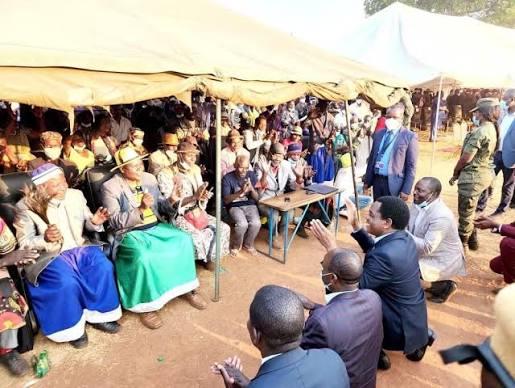
The request by the North-Western Province Council of Chiefs for the government to allocate at least 15% of mining revenues to their province for local development projects has been pending for nearly 3 years, since the Council of Chiefs in North Western Province requested President Hakainde Hichilema to allocate at least 15% of mining revenues to their province for local development projects. In 2022, the Council of Chiefs asked the government to allow a portion of the revenue collected from mining activities within the province to remain to facilitate development.
They argued that this would allow local communities to benefit from their “God-given wealth,” natural resources, and enable the provincial administration to fund critical infrastructure projects. The chiefs, who are the rightful custodians of community interests, had expressed confidence that their request would be granted.
Although others believe the proposal may not be viable, there have been calls for the government to issue a clear and affirmative response in order to dispel ongoing speculation among the people of North Western Province. In an interview with the Zambian Business Times (ZBT), Mining Expert Fabian Chewe, who also serves as a Committee Member for the Federation for Small Scale Mining Associations of Zambia (FSSMAZ), observed that the government had not issued an affirmative response to the proposal.
Chewe explained that this was likely because the proposal resembled the introduction of a new tax. He further noted that, given Zambia’s highly centralized governance and decision-making structures, implementing such a policy would be particularly challenging.
“I do not believe the government has issued an affirmative response to the proposal, largely because the nature of the proposal resembled a form of taxation. In the context of Zambia, where governance and decision-making are highly centralized, implementing such a policy would be quite challenging.”
The proposal was, however, submitted directly to the head of state, and it attracted significant public attention, with widespread media coverage and discussions. Given this visibility, there is a clear expectation for the government to provide an official response to the chiefs who made the request.
The absence of a public, affirmative response could lead stakeholders to draw their own conclusions, potentially fueling speculation or dissatisfaction. “It is possible that the president or his office may have engaged with the chiefs privately, away from the public eye, to explain the complexities and potential challenges of implementing their request. Such private communications, if they occurred, have not been made public, which might explain why there has been little follow-up or public discussion in recent years.”
Other experts feel the lack of a clear, public response leaves room for speculation and uncertainty. Given the public nature of the original proposal, it would be prudent for the government to provide a transparent and official response to clarify its position and address the concerns of the chiefs and other stakeholders. This would help to dispel speculation and ensure that all parties are adequately informed of the government’s stance.
Article by Zbt Analyst



Community Feedback