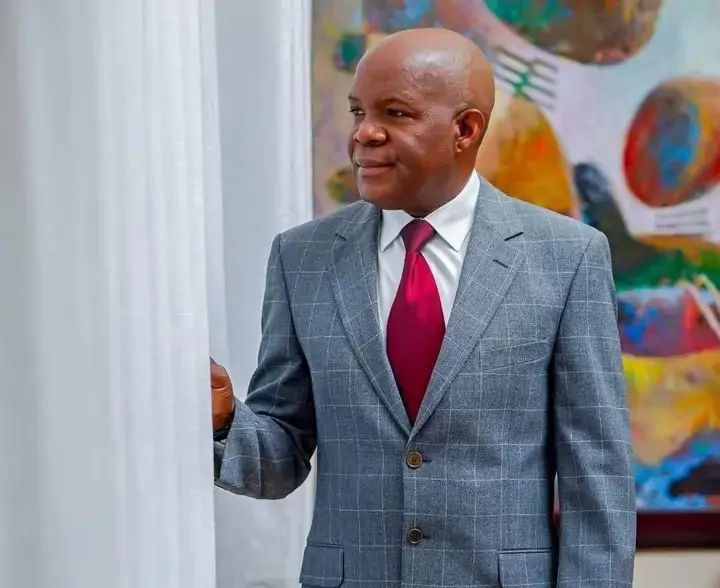
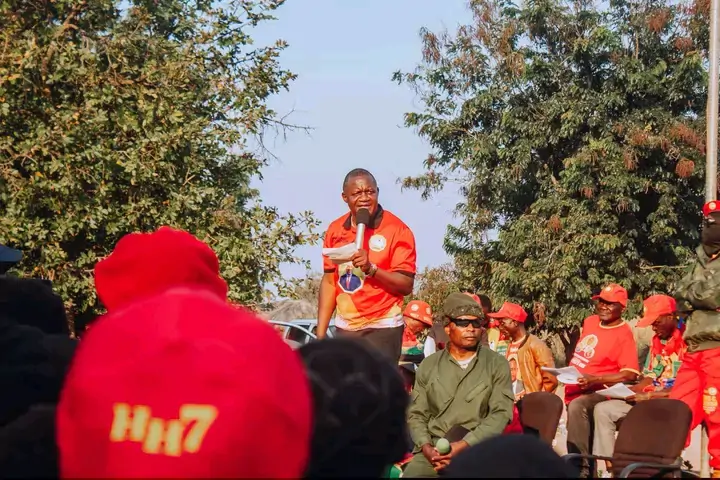
Fred M’membe lectures Army Commanders, General Staff, and Commissioned Officers of the Zambia Army

Breaking News Zambia
NewsLECTURER OF OPPORTUNITY TITLED: THE CONSTITUTIONAL PARADOX: BALANCING NATIONAL SECURITY WITH DEMOCRATIC EXPRESSION Audience: Present and Future Commanders, General Staff, and Commissioned Officers of the Zambia Army I. INTRODUCTION: The Soldier and the Sovereign Citizen: Gentlemen, Ladies, Present and Future Commanders of the Zambia Army: In a constitutional democracy, the relationship between the citizenry and […]
LECTURER OF OPPORTUNITY TITLED: THE CONSTITUTIONAL PARADOX: BALANCING NATIONAL SECURITY WITH DEMOCRATIC EXPRESSION
Audience: Present and Future Commanders, General Staff, and Commissioned Officers of the Zambia Army
I. INTRODUCTION:
The Soldier and the Sovereign Citizen:
Gentlemen, Ladies, Present and Future Commanders of the Zambia Army:
In a constitutional democracy, the relationship between the citizenry and the military must be anchored on absolute statutory clarity, structural subordination, and mutual respect.
We do not operate in a vacuum. We operate under the supreme law of the land.
Recent history, specifically the volatile public discourse surrounding the August 13, 2026 general elections, provides us with a profound operational lesson.
Prior to those elections, statements from the highest office of Zambia Army command, specifically Lieutenant General Geoffrey Choongo Zyeele, regarding the army’s stance on preventing electoral “mischief,” triggered severe public anxiety.
When our people’s army, the Zambia Army spokesperson, Colonel Sydney Mwewa, responded by demanding that political actors and social media users cease drawing the Army into partisan debates, it exposed a fundamental friction point.
As future and present commanders, you must understand that while safeguarding the reputation of the Zambia Army as a disciplined, non partisan institution is your doctrinal duty, issuing blanket demands for civic silence misinterprets the very nature of democratic oversight.
In a free Zambia, the uniform serves the citizen. The citizen does not serve the uniform.
II. Constitutional Boundaries and the Jurisdiction of Peace:
Your mandate under Article 194 of the Constitution of Zambia is explicit: you protect territorial integrity and uphold constitutional order.
You are the shield against chaos. However, external defense and domestic law enforcement are distinct legal regimes.
Historically and legally, the management of internal peace and order during domestic electoral cycles falls squarely under the statutory mandates of civilian institutions, specifically the Electoral Commission of Zambia (ECZ) and the Zambia Police Service.
When the Army command signals that it will independently “pick enemies of peace” within domestic borders, civil society and ordinary citizens possess a constitutional right and a civic duty to demand clarity.
If you attempt to enforce silence, you commit a command overreach that risks chilling free speech.
Let me be clear here, the deliberate dissemination of state, sponsored false narratives or inflammatory content that incites public disorder must be checked, but it must be checked by civilian law enforcement.
Honest critique, public anxiety, and political debate regarding your role in civilian life are not “threats to national security.” They are the hallmarks of a vigilant populace.
You cannot demand respect by forcing silence, you command it through strict adherence to constitutional boundaries.
III. The Shadow of International Accountability:
The Rome Statute
As future leaders, you must recognise that your actions on the battlefield or during domestic deployments are subject to both local law and international scrutiny.
Zambia is a nation that famously affirmed its commitment to global justice when over 93% of citizens voted to remain in the International Criminal Court (ICC).
If local chains of command fail or break down, international mechanisms like Article 15 Communications serve as a legal mechanism of last resort.
We can already see this play out. Following political tensions and joint security operations, formal complaints can be submitted directly to the ICC Prosecutor in The Hague. These communications explicitly report accused Lieutenant General Geoffrey Choongo Zyeele, Brigadier General Moses Shapwaya, Major Lyempe Kapumpa, and subordinate commandos of orchestrating a mid August military raid at a private residence that resulted in the alleged extrajudicial killing of former Minister Mutotwe Kafwaya.
You must understand the exact legal thresholds of the Rome Statute to protect your command and Zambia from international liability:
Incitement to Genocide (Articles 6 & 25): Direct and public urging to destroy a national, ethnic, racial, or religious group is a severe international crime.
A commander can be prosecuted for incitement even if the full scale of the genocide hasn’t successfully occurred.
Crimes Against Humanity & War Crimes (Articles 7 & 8): A localised murder or extrajudicial killing rises to an international crime if it is committed as part of a widespread or systematic attack directed against a civilian population, or during an active armed conflict.
Disinformation as Complicity: Spreading false reports or propaganda is not an independent ICC crime. However, if a command knowingly broadcasts false claims to dehumanise a minority group or fabricate a threat to mobilise mass violence, international tribunals (such as the ICTR precedents) will prosecute those officers for complicity or incitement.
IV. The Principle of Complementarity and Local Remedies Do not miscalculate the legal landscape: the ICC operates strictly under the principle of complementarity. It is a court of last resort. The ICC will only step in if the national judicial system of Zambia is demonstrated to be entirely unable or genuinely unwilling to prosecute individuals in local courts.
If a subordinate officer or a security agent under your command suppresses expression or subjects citizens to cruel, inhuman, or degrading treatment—such as physical abuse or “frogging”—domestic legal channels will be mobilised immediately before international intervention occurs:
The Human Rights Commission (HRC): Possesses a direct constitutional mandate to investigate abuses committed by state actors. They operate toll-free (8181) and via direct channels (complaints@hrc.org.zm) to document violations.
The High Court of Zambia:
Citizens have the right to file a Constitutional Petition under Part III of the Constitution (The Bill of Rights) to seek immediate judicial declarations, injunctions, and financial damages against the state or your command.
The Police Public Complaints Commission (PPCC): Acts as an immediate oversight body to review misconduct stemming from joint security or law enforcement actions.
V. Conclusion:
The True Measure of Command
Future and present leaders of the Zambia Army, sovereignty is a legal responsibility, never a shield against accountability.
True military professionalism is not measured by the volume of your rhetoric or your ability to intimidate the public square.
It is measured by your absolute submission to civilian authority, your unwavering defence of the Constitution, and your respect for the citizens you are sworn to protect.
When you step back from political rhetoric and leave domestic law enforcement to Zambia Police as a civilian agency, command at Zambia Army Headquarters will naturally pacify the public square.
Guard your discipline, protect your honour, and remember that in a free Zambia, the uniform always serves the citizen.
The Constitution of Zambia guarantees freedom of expression, and no law grants the Zambia army direct power to censor or block free speech.
Constitutional Protections Article 20:
Protects freedom of expression, including the freedom to hold opinions and to receive and communicate ideas and information without interference.
Supreme Law:
The constitution remains the highest law of the land, superseding military or institutional directives.
Q & A?
Fred M’membe

Community Feedback