DAY 3 OF COURT CLOSURES: The cost of delayed justice

Breaking News Zambia
News13 Views Today is the third day that Zambia’s courts have remained shut, and to some analysts what started as a tense moment around the presidential election petition has grown into a much wider problem. They posit that this is no longer just about one election case and is now about whether every Zambian can […]
13 ViewsToday is the third day that Zambia’s courts have remained shut, and to some analysts what started as a tense moment around the presidential election petition has grown into a much wider problem.
They posit that this is no longer just about one election case and is now about whether every Zambian can walk into court and be heard.
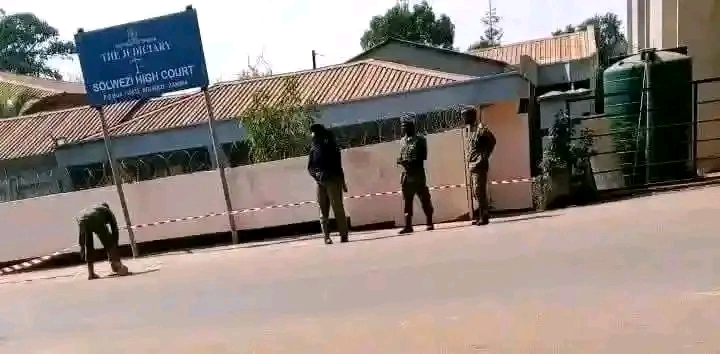
On 24 August, the country’s superior courts, including the Constitutional Court and Supreme Court, were closed.
Authorities cited security concerns.
Police were seen at the court buildings and staff were told not to come to work.
The timing matched the deadline to challenge the presidential election results.
However, beyond the politics, there are people whose lives depend on the courts opening, and the continued closure has direct impact on their daily living.
“Consider the person whose case has been waiting for months, or years. Consider a family waiting for a judgment. Consider a worker in a labour dispute. Consider someone fighting to keep their home, to protect their rights, or to secure their freedom. Consider an accused person waiting for trial. Consider a victim with nowhere else to go. For them, the court is not an idea. It is the last place to turn when everything else has failed.
“When the courts are closed, justice is also closed. When hearings stop, people’s lives are put on pause. When citizens cannot enter the institution meant to hear their complaints, the impact goes far beyond any one political contest.
“That is why we cannot talk about these closures only in terms of the presidential petition.
“Yes, shutting the courts on the last day to file an election challenge raises serious questions. Civil society groups, lawyers and opposition voices have asked whether this interfered with the constitutional right to challenge an election.
“But the more urgent question is what happens to ordinary people when the doors are locked.
“The judiciary exists because people sometimes have no power against other people, against institutions, or even against the State.
“Those with money can sometimes find other options. Those with connections can sometimes find shortcuts. Those with influence can sometimes push their way through.
“The ordinary citizen has the Constitution, the law, and the courts. Remove the courts, and you remove the ordinary person’s main way to seek justice. That is why this should matter to every Zambian, whatever their politics.
“Today it may be an election petition. Tomorrow it could be a dispute over land. A dispute at work. A family matter. A question of constitutional rights. A question of liberty. A claim against a government body.
“Justice cannot be applied only when it is convenient. The courts cannot be open in calm times and shut in tense times. A country that works depends on institutions that remain open to citizens, especially when politics is difficult.
“The role of the judiciary is to settle disputes through law, not through power. It is where evidence is looked at, arguments are heard, and decisions are made according to the Constitution.
“We must insist on the principle that courts remain open to the people.
“This is bigger than Brian Mundubile.
This is bigger than Hakainde Hichilema.
This is bigger than UPND.
This is bigger than the opposition.
“This is about Zambia.
“When people start to believe the courts will not be there when they need them most, the relationship between citizen and country begins to break down.
“Three days of closure must not become normal. Silence must not become normal. Denying access to justice must never become normal.
“Open the courts. Let cases be heard. Let the law speak. Let citizens have their day in court. Because when the doors of justice are shut for one person, we should all ask:
“Who will keep them open when it is our turn to seek justice,” notes one analyst.
Corporate lawyer, Muleka Kapatiso says:
“For the unsuspecting members of the public, there is no electronic filling happening in Zambian courts right now.
“The closest you can get to send any court documents is by emailing them to judiciary officers, the Chief Justice and anyone under his leadership.
“The problem is that even if you email it, judiciary employees are not at work and there is no way of stamping, filling or allocating the matter.
“In short, unless the Judiciary finds “covid-19” kind of helping the public, the closure in force will have devastating effects of commerce and human rights.
“The Judiciary of Zambia will need to guide the nation on how judicial functions are being discharged and how judicial services may be accessed by the public.”



Community Feedback