BRICS moves to reduce dollar dependence — and Zambia is already using China’s currency

Breaking News Zambia
News12 ViewsNEW DELHI — BRICS leaders have moved to deepen trade in local currencies and develop more efficient cross-border payment systems, in a development that could gradually reduce the role of the US dollar in trade among emerging economies. But despite growing calls for a financial system less dependent on the dollar, BRICS has not […]
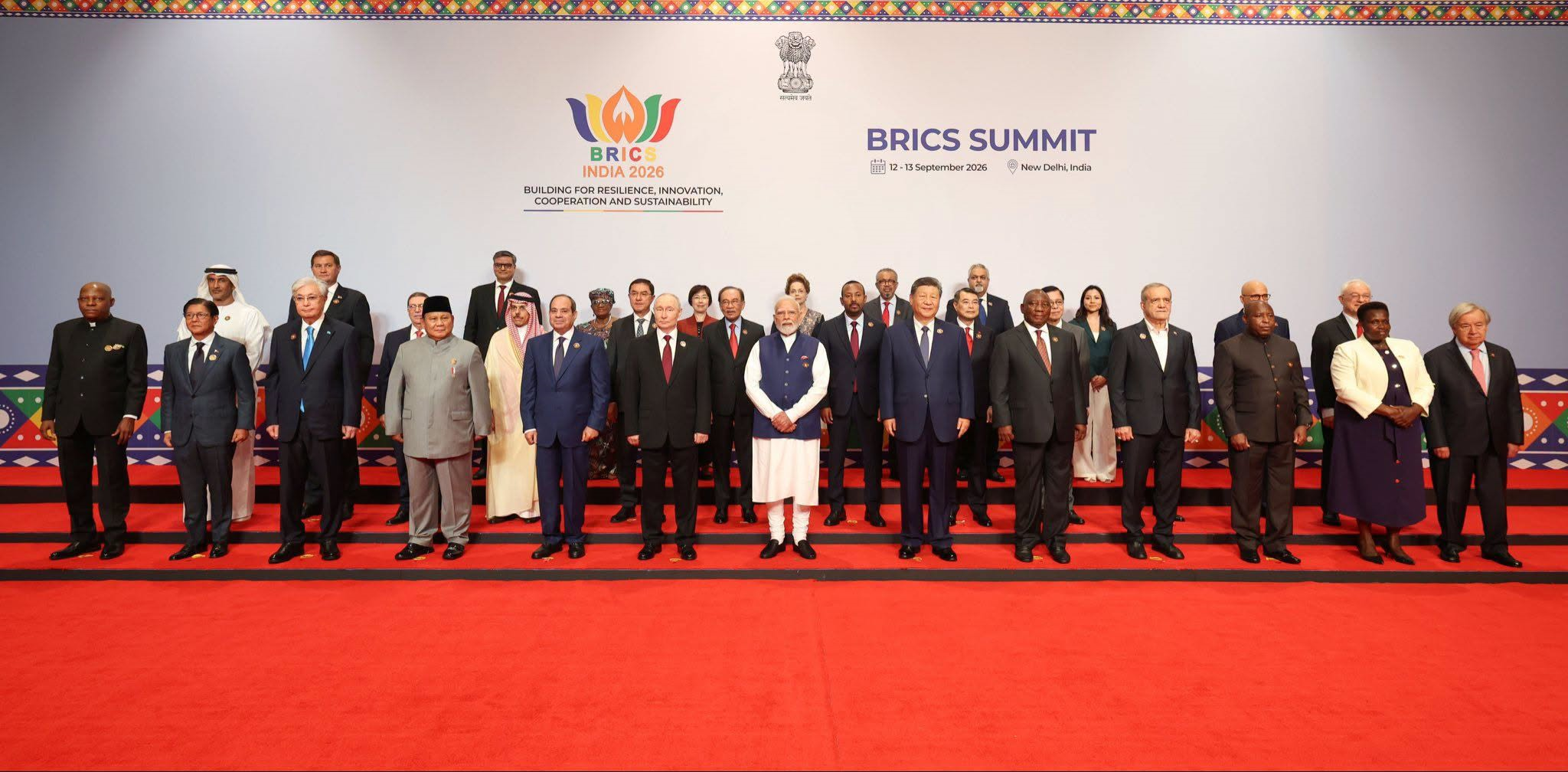
12 ViewsBRICS leaders at the 18th BRICS Summit in New Delhi, September 12, 2026. Photo: Press Information Bureau, Government of India
NEW DELHI — BRICS leaders have moved to deepen trade in local currencies and develop more efficient cross-border payment systems, in a development that could gradually reduce the role of the US dollar in trade among emerging economies.
But despite growing calls for a financial system less dependent on the dollar, BRICS has not adopted a common currency.
Instead, the bloc’s latest move is more practical: encouraging trade and investment in members’ own currencies while working towards greater interoperability between national payment and financial messaging systems.
The development was contained in the New Delhi Declaration adopted at the BRICS summit on September 12.
The declaration acknowledged work by the BRICS Payment Task Force to explore more efficient cross-border payment mechanisms and to study how national payment and messaging systems could work together.
It also backed discussions on promoting trade settlements and investment using BRICS members’ local currencies, while recognising that countries will make decisions according to their own national priorities.
No new BRICS currency — but a different approach
For years, discussions surrounding BRICS have generated headlines about the possibility of a new currency capable of challenging the US dollar.
That has not happened.
Instead, the bloc appears to be pursuing a gradual approach: make it easier for countries to trade directly in their own currencies and move money across borders without having to rely on the dollar for every transaction.
The distinction is important.
BRICS is not announcing that the dollar is being replaced.
It is trying to create more alternatives to using the dollar as an intermediary.
The push includes efforts to connect national payment systems and make cross-border transactions faster and cheaper. BRICS members are already examining ways of linking payment infrastructure, while countries such as India and Brazil have developed large domestic instant-payment systems that could potentially be connected across borders.
Why this matters to Africa
For African countries, the development could become significant because many economies on the continent have strong trading relationships with China, India, the United Arab Emirates, Brazil and other emerging economies.
A major question is whether African businesses could eventually conduct more trade directly in the currencies of their trading partners without first converting into US dollars.
That could potentially reduce some currency-conversion costs and make cross-border payments easier.
But it would not mean that African countries would suddenly stop using the dollar.
The US currency remains deeply embedded in international trade and finance, and BRICS itself is not presenting its current initiatives as the immediate replacement of the dollar.
Zambia is already getting a taste of the shift
For Zambia, the BRICS development is particularly interesting because the country has already begun using the Chinese renminbi in selected official transactions involving the mining sector.
In January 2026, Government confirmed that some mining companies were being allowed to pay part of their tax obligations in Chinese renminbi alongside the US dollar.
Finance and National Planning Minister Situmbeko Musokotwane said the arrangement involved four mining companies, with 73 percent of mining taxes continuing to be paid in US dollars.
Bank of Zambia Governor Denny Kalyalya said Chinese-owned mining companies had begun paying mining taxes in renminbi in October 2025.
The move was linked partly to Zambia’s substantial trade and financial relationship with China, including the fact that a significant share of Zambia’s copper exports goes to China. It was also expected to help reduce currency-conversion costs and improve Zambia’s ability to manage Chinese-denominated obligations.
The Bank of Zambia’s 2025 Annual Report also confirms that Government began receiving taxes from some mining companies in Chinese renminbi from November 2025.
Could Zambia trade with China without the dollar in the middle?
Yuan
This is where the BRICS development becomes particularly relevant to Zambia.
If BRICS succeeds in making local-currency settlement and cross-border payment systems more interoperable, countries that have strong trade relationships with China could potentially have more options for settling transactions directly in renminbi.
For a Zambian company buying machinery, equipment or other goods from China, for example, the long-term question is whether such transactions could increasingly be settled directly between the two currencies rather than requiring the dollar to act as the intermediary.
That does not mean this is already available for all Zambian businesses.
Nor does Zambia’s use of the renminbi for selected mining tax payments mean that the country is abandoning the US dollar.
Rather, it demonstrates that currency diversification is already happening in specific areas of Zambia’s economy.
What could this mean for ordinary Zambians?
If cross-border local-currency payments become more widespread, the potential benefits could include:
- Lower currency-conversion costs for some businesses;
- Easier payments between African and Asian trading partners;
- Greater options for companies importing goods from China;
- Reduced dependence on the US dollar for some transactions;
- Greater diversification of foreign-exchange reserves; and
- Potentially faster cross-border payments.
There are also challenges.
Different currencies have different levels of liquidity, convertibility and stability. Countries also have different financial regulations and payment systems.
BRICS therefore faces significant technical and economic challenges before its ambitions can become a seamless alternative to dollar-based international payments.
So, is BRICS creating a currency to replace the dollar?
No — not at this summit.
The more important development is arguably less dramatic but potentially more practical.
BRICS is working towards a world in which countries have more choices about how they trade and settle payments.
For Zambia, that conversation is no longer theoretical.
The country is already experimenting with the use of the renminbi in selected mining-tax transactions as its economic relationship with China continues to deepen.
The bigger question now is whether that experiment — combined with the broader BRICS push for local-currency trade and cross-border payment integration — eventually becomes part of a much larger transformation in how African countries conduct international trade.
Zambian Eye will continue to follow what the BRICS financial initiatives mean for Zambia, Africa and the global economy.
Reporting by Zambian Eye





Community Feedback