Barotseland Must Read the Signs Clearly: Stand Against Being Used as Political Vote Bank-Dr. Martin Mushumba

Breaking News Zambia
NewsBarotseland Must Read the Signs Clearly: Stand Against Being Used as Political Vote Bank The remarks attributed to Hon. Mutotwe Kafwaya questioning why Western Province should have an international airport must not be treated as an isolated slip of the tongue. They reveal a deeper political attitude that the people of Barotseland must confront with […]
Barotseland Must Read the Signs Clearly: Stand Against Being Used as Political Vote Bank
The remarks attributed to Hon. Mutotwe Kafwaya questioning why Western Province should have an international airport must not be treated as an isolated slip of the tongue. They reveal a deeper political attitude that the people of Barotseland must confront with seriousness.
An airport is not built because a region is already fully developed. It is built to unlock development. It is built to open tourism, trade, agriculture, fisheries, investment, emergency services, mobility and regional connectivity. To ask “what is there in Western Province?” is to expose a painful ignorance of Barotseland’s potential and a disturbing contempt for a people who have waited for development for far too long.
When Hon. Mutotwe Kafwaya says Barotseland does not need an international airport, he is not making a careless remark. He is finally speaking the quiet part out loud. This is the same Mutotwe Kafwaya who served as a senior minister in the Patriotic Front government, the very government that borrowed money to build King Lewanika University, only for those funds to be diverted to Kapasa Makasa University in Muchinga Province. The same government that borrowed money to rehabilitate the Lusaka–Mongu Road, only to redirect it to township roads in Muchinga Province, yet the region remained trapped in neglect while other areas enjoyed accelerated road works. When such patterns are followed by remarks suggesting that Barotseland does not deserve modern aviation infrastructure, people are entitled to see a pattern, not a coincidence.
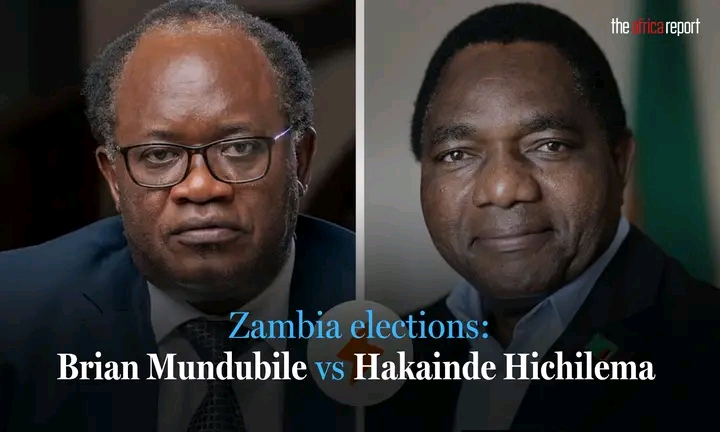
Brian Mundubile and Makebi Zulu, now his political bedfellows under the Tonse Alliance, were also ministers in that government. This is not a coincidence. It is a long, documented pattern of systematic marginalisation against Barotseland.
Kafwaya argues that Barotseland has “nothing.” If that is true, who is to blame? The people of Barotseland who till the land, fish the rivers, grow the rice, and raise cattle that feed this nation or the very government in which he held power for nearly a decade and deliberately starved the region of development?
Suffice it to mention that Kafwaya served under a government that had every opportunity to build universities, roads, industries, and airports in Barotseland, yet chose to channel national resources elsewhere while keeping Barotseland as a political afterthought, useful only during elections.
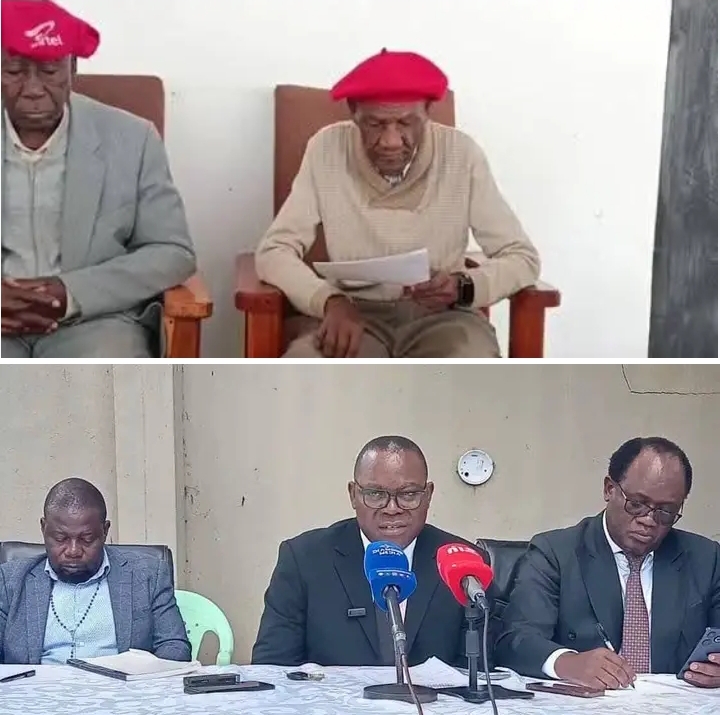
The Barotse Royal Establishment’s demand for an apology is understandable, but it is not enough. An apology from a man who has merely voiced what his political tradition has always practiced would be empty theatre.
This moment calls for more than wounded letters. It calls for a clear-eyed awakening. The people of Barotseland must recognise that there are political forces that do not see the province as an equal partner in Zambia’s future, but as a vote bank to be wooed with slogans and then ignored once ballots are counted. Kafwaya’s contempt is not an isolated outburst; it is the exposed root of a long-standing strategy founded on tribal arrogance and developmental sabotage.
Honestly, this is not a time to seek apologies. It is a time for the BRE, the Kuta, and every son and daughter of Barotseland to mobilise their communities against those who treat the region as inferior and only good for electoral gain. Besides, the airport in reference is not a favour to the people of Barotseland. It is a test of whether Zambia truly means “One Zambia, One Nation.” Barotseland must refuse to be anyone’s second thought ever again.
Dr. Martin Mushumba
Public Policy and Education Quality Assurance Expert

Community Feedback