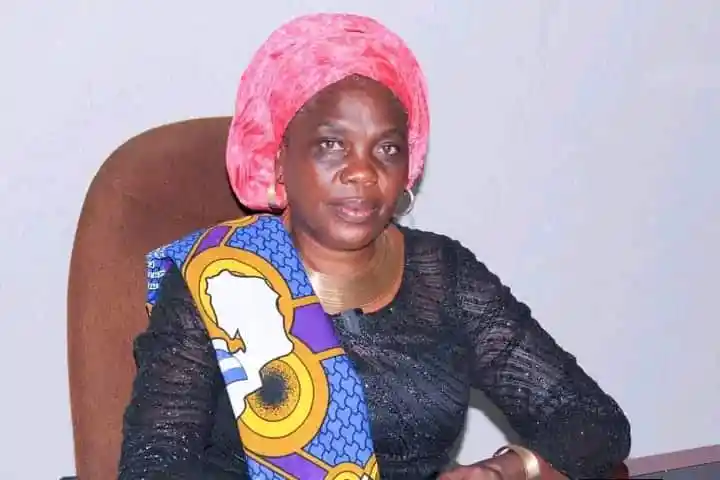
‘ZAMBIA STILL FAR FROM GENDER PARITY’ AS WOMEN’S CANDIDATURE DROPS IN 2026 – NGOCC

Breaking News Zambia
NewsBy Francis Chipalo The Non-Governmental Gender Organisations’ Coordinating Council (NGOCC) says Zambia’s democracy risks falling behind as women’s representation among candidates for the 13 August 2026 General Elections declines across all levels. NGOCC Board Chairperson Beauty Katebe said the nomination figures released by the Electoral Commission of Zambia (ECZ) show that despite policy commitments and […]
By Francis Chipalo
The Non-Governmental Gender Organisations’ Coordinating Council (NGOCC) says Zambia’s democracy risks falling behind as women’s representation among candidates for the 13 August 2026 General Elections declines across all levels.
NGOCC Board Chairperson Beauty Katebe said the nomination figures released by the Electoral Commission of Zambia (ECZ) show that despite policy commitments and reforms, women continue to face major barriers to elective office.
According to the ECZ, progress has stagnated or regressed since 2021: Presidential Race: Only 1 of 14 candidates (7.1%) is a woman, compared to 1 of 15 (6.7%) in 2021. National Assembly: Women make up 122 of 973 candidates (12.5%), down sharply from 181 of 857 (21.1%) in 2021, and Mayoral and Council Chairperson, just 48 of 439 candidates (10.9%) are women, compared to 56 of 381 (14.7%) five years ago. Ward Councillor: Women account for 433 of 5,099 candidates (8.5%), a drop from 565 of 5,693 (9.9%) in 2021.
“These statistics paint a worrying picture. They demonstrate that Zambia remains far from achieving the 50:50 gender representation envisaged in our Constitution, the SADC Protocol, and the Sustainable Development Goals,” Katebe said.
While acknowledging political parties that fielded women and the growing number of women running as independents, Katebe expressed concern over reports of violence, intimidation, and manipulation during candidate adoption within some parties.
“Such practices undermine democratic values, discourage capable women from offering themselves for public office, and weaken public confidence in internal party democracy,” she stated.
Meanwhile, Katebe noted the introduction of the Mixed Member Proportional Representation (MMPR) system as a welcome step to increase inclusion.
She however, said it cannot replace deliberate action by parties to nominate women in competitive, winnable constituencies.
“Sustainable progress requires women to participate fully and equally across all elective positions, not just through reserved seats,” she said.
The council has since called on political party leaders to take personal responsibility by creating transparent, merit-based adoption processes and investing in mentoring women leaders.
It further urged the ECZ, law enforcement, media, CSOs, and traditional leaders to safeguard peaceful and issue-based campaigns.
“A democracy in which women remain significantly under-represented cannot fully reflect the aspirations, experiences, and priorities of all citizens. Women must not only be encouraged to participate but must be genuinely supported, protected, and elected,” Katebe added.

Community Feedback