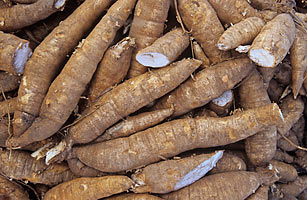
Zambia produces Cassava worth $917m

Breaking News Zambia
NewsAccording to the 2025/2026 Crop Forecast Survey, […]
According to the 2025/2026 Crop Forecast Survey, Zambia is projected to produce 3,299,829 metric tonnes of cassava from 281,744 hectares planted across the country, a harvest whose estimated market value stands at approximately K16.5 billion (about US$917 million) based on the current buying price of K250 per 50-kilogram bag.
Speaking in an interview with Zambian Business Times – ZBT, Livingstone Cooperatives Union (LCU) Chairperson and Agricultural Expert, Rwinick Mapanza, said the projected harvest should serve as a wake-up call for policymakers to unlock the full economic potential of cassava. “This figure should wake all of us up because 3,299,829 metric tonnes of cassava translates to about K16.5 billion sitting in our fields and communities, and that is not just food but potential income, jobs and rural wealth,” said Mapanza.
He explained that cassava has become one of Zambia’s most strategic crops because it is highly resilient to drought, making it an important pillar for both climate resilience and national food security. “Cassava doesn’t fail easily in drought and it is our climate-smart insurance crop, especially for provinces where it is already a staple and a survival crop,” said Mapanza.
Meanwhile, he noted that the crop has enormous income-generating potential, explaining that a farmer producing just 10 tonnes of cassava at the current buying price can earn about K50,000, creating opportunities to improve household livelihoods. “That money goes towards school fees, health services and supporting small businesses, which shows that cassava is becoming a powerful economic crop for rural communities,” he said.
However, Mapanza warned that Zambia continues to lose billions of kwacha in potential value because most cassava is sold as a raw commodity instead of being processed into higher-value products such as flour, starch, ethanol and animal feed. “Right now that value is being lost through post-harvest waste, poor prices and the lack of a structured market because farmers are forced to sell cheaply to middlemen as they have nowhere to take their bulk produce,” he said.
Mapanza has since called on Government to extend the Food Reserve Agency (FRA) marketing model to cassava by introducing a guaranteed floor price, establishing collection depots in major cassava-producing districts and purchasing dried cassava chips and flour in the same way it procures maize. “If maize farmers deserve a ready market, cassava farmers deserve the same because they feed the nation during difficult years, so let us buy cassava, pay farmers on time and unlock the K16.5 billion potential for rural Zambia,” he said.
Article by Phillip Sinkala




Community Feedback