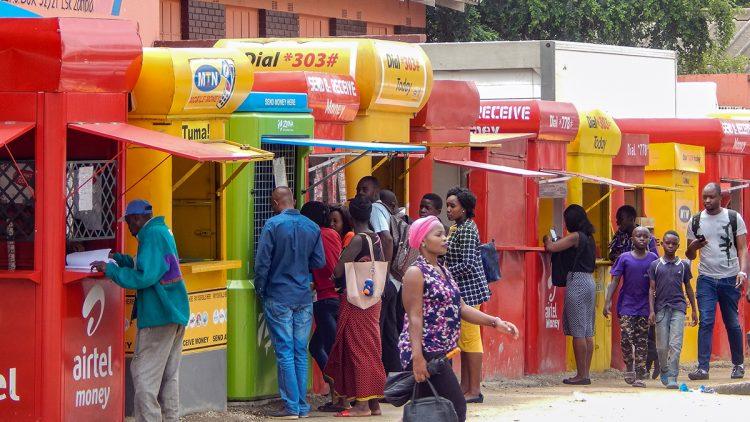
Mobile Money active wallets grow by 17 million

Breaking News Zambia
BusinessDuring the launch of the standard mobile […]
During the launch of the standard mobile money agent training manual, Bank of Zambia (BOZ) Governor Dr. Denny Kalyalya revealed that mobile money transaction values grew more than sevenfold between 2020 and 2025, with active wallets nearly doubling to 17 million. Additionally, Dr. Kalyalya said financial inclusion rose to 80 percent, all as a result of the reforms made towards the growth of financial inclusion.
Experts in the financial space have regarded this development to be positive but, however, emphasized the need to address issues around financial management. According to economic expert Trevor Hambayi, the doubled 17 million active wallets and financial inclusion rising to over 80% are positive developments for the country.
“The country has been posting positives when it comes to financial literacy in the sense that, firstly, financial literacy is measured by somebody who has an active bank account and mobile account, which are considered to be part of financial literacy, and the number has been growing from 69% to now over 80%, which is very positive for the country,” said Hambayi in an interview with the Zambian Business Times (ZBT). However, Hambayi noted that despite financial inclusion being reported to be over 80%, the issue around financial management needs proper address, as most individuals depend on unregulated banking commonly known as Kaloba.
“Issues around financial management really need to be addressed because most people are depending so much on unregulated banking like Kaloba, and this needs adequate attention because it takes away from the country’s savings, limits the productive sector, and puts most individuals under pressure in them having to live beyond their means.”
“Key issues that must be addressed are, of course, a lot of individuals earning less than they need to be able to manage their affairs, and that needs to improve towards economic growth (GDP growth), which will ensure that they earn more money to enable them to cover their expenses within their budget,” said Hambayi.
Hambayi mentioned that with financial inclusion now standing at over 80%, the country needs to reach over 90%. He noted that in order for the country to achieve over 90% in terms of financial inclusion, the country needs to be productive and also ensure that financial literacy is promoted in rural areas.
Article by Justine Phiri







Community Feedback