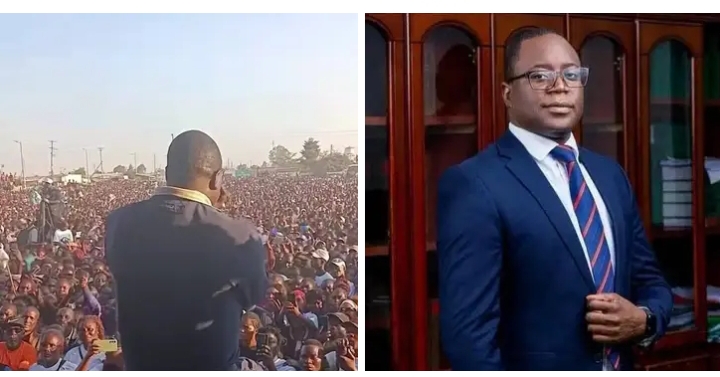
Makebi Zulu’s Bulletproof Vest Stunt: Political Amateurism Disguised as Political Theatre

Breaking News Zambia
NewsMakebi Zulu’s Bulletproof Vest Stunt: Political Amateurism Disguised as Political Theatre By Golden Mapulanga-political analyst and communication consultant Makebi Zulu’s decision to publicly remove his bulletproof vest during a political rally in Matero is not the mark of a courageous politician. It is a deeply unfortunate example of political theatre, poor judgement and unnecessary paranoia. […]
Makebi Zulu’s Bulletproof Vest Stunt: Political Amateurism Disguised as Political Theatre
By Golden Mapulanga-political analyst and communication consultant
Makebi Zulu’s decision to publicly remove his bulletproof vest during a political rally in Matero is not the mark of a courageous politician. It is a deeply unfortunate example of political theatre, poor judgement and unnecessary paranoia.
There is a fundamental difference between legitimate security precautions and turning security equipment into a campaign prop. If Makebi genuinely believed that his life was in immediate danger, the responsible thing would have been to allow trained security personnel to manage the risk—not to dramatically strip off protective equipment before a crowd and convert a serious security matter into a political performance.
Zambia has a long and demonstrable tradition of peaceful political participation. Political parties campaign, hold rallies, criticise government and mobilise supporters across the country. Since President Hakainde Hichilema assumed office, Zambia has continued to present itself as a country where political actors can participate openly in the electoral process. This is not to suggest that security risks do not exist. They do. But responsible political leadership requires proportionality, maturity and a proper understanding of the security environment.
What Makebi Zulu did risks communicating a completely different message.
1. It creates a false impression that Zambia is a war zone
When a presidential running mate appears at a political rally wearing a bulletproof vest and then theatrically removes it, the imagery is powerful—but not necessarily in the way intended.
It can create the impression that:
political leaders are under constant threat;
public rallies are inherently dangerous;
Zambia is politically unstable;
the opposition is operating under extreme persecution; or
violence is imminent.
That is a dangerous political narrative to normalise, particularly in a country preparing for a national election.
2. It is political propaganda disguised as personal bravery
The public removal of the vest appears less like a genuine security decision and more like a carefully staged political message:
> “I was afraid, but I am now showing you that I am not afraid
But presidential politics requires more than dramatic gestures. A presidential candidate and running mate must demonstrate judgement, restraint and emotional maturity.
You cannot govern a country through political theatrics.
A person seeking the highest political office must understand that every public action has implications beyond the immediate applause of a rally crowd.
3. It undermines the seriousness of real security threats
Security professionals do not treat protective equipment as a political costume. A bulletproof vest is designed for a specific security purpose. If a security assessment determines that protection is necessary, removing it for political effect can be irresponsible.
If there was no genuine security threat, then the question becomes even more serious:
Why was the vest being worn in the first place?
Was it a legitimate security measure—or was it intended to create political imagery?
Either way, the incident raises questions about judgement.
4. Makebi appears to be importing a politics of fear into a peaceful electoral environment
This is perhaps the most concerning aspect.
Zambia has had political tensions, disagreements and electoral disputes. But the country has not become a battlefield. Political parties are campaigning. Candidates are addressing rallies. Citizens are exercising their democratic rights.
The opposition should be offering Zambians a credible alternative vision for the future, not manufacturing an atmosphere of fear and insecurity.
The question voters should ask is:
> If a political party cannot convince voters without creating dramatic security narratives, what does that say about its political strategy?
5. Political newcomers must understand that national leadership is not a stage for impulsive behaviour
Makebi Zulu may be an experienced lawyer and politician, but participation in top-level presidential politics requires a different level of political maturity.
At this level, every gesture becomes a message.
Removing a bulletproof vest at a rally may be intended to communicate courage. But it may equally communicate:
paranoia;
insecurity;
poor judgement;
political inexperience; or
a willingness to exploit fear for political mobilisation.
The public is entitled to ask whether this is the kind of judgement they want in someone seeking to occupy the highest levels of national leadership.
The bigger political problem
The NRPUP ticket needs to decide what kind of campaign it wants to run.
Does it want to present a serious alternative government with credible policies, timelines, financing mechanisms and a clear plan for Zambia?
Or does it want to rely on dramatic political symbolism, fear-based narratives and emotional performances?
Because a bulletproof vest is not a manifesto.
Removing it dramatically is not a policy.
And appearing paranoid about Zambia’s political environment is not evidence of presidential courage.
The real courage required in politics is the courage to present a credible alternative, defend it intellectually and convince voters without manufacturing unnecessary fear.
My conclusion
Makebi Zulu should have shown better judgement.
Zambia’s political environment is not perfect, and no responsible person should dismiss legitimate security concerns. But there is a difference between taking security seriously and performing insecurity for political effect.
A presidential running mate should be helping to reassure the nation—not creating the impression that political rallies are dangerous battle zones
Zambia needs leaders who can distinguish between genuine security threats and political propaganda. It needs leaders who understand that public confidence is a national asset. And it certainly needs leaders who know that courage is demonstrated through sound judgement—not by theatrically removing a bulletproof vest before a cheering crowd.
Your Honourable Diplomat 🙏
Community Feedback