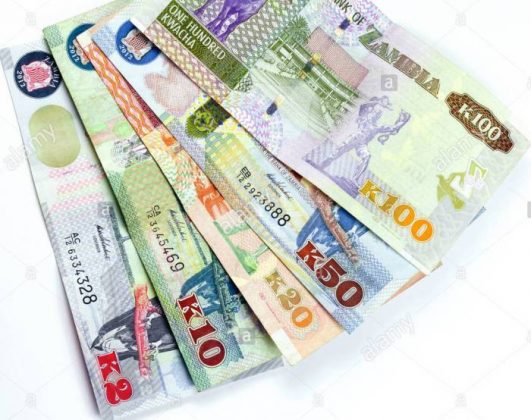
Kwacha firms to K18.88/$ during elections as investors adopt wait and see approach

Breaking News Zambia
News0 Views The Kwacha has held firm at K18.88 against the US dollar during Zambia’s voting and vote counting period, but currency dealers say the stability is masking deep investor caution as the country awaits final presidential results. According to mid-market data, the local currency closed at K18.97 per dollar on Saturday, after trading between […]
0 ViewsThe Kwacha has held firm at K18.88 against the US dollar during Zambia’s voting and vote counting period, but currency dealers say the stability is masking deep investor caution as the country awaits final presidential results.
According to mid-market data, the local currency closed at K18.97 per dollar on Saturday, after trading between K18.75 and K18.97 through the week. That’s a marked improvement from the K26+ levels seen last year.
Commercial banks and bureaus in Lusaka, Ndola and Kitwe quoted retail rates slightly higher, with dollar sales ranging between K18.90 and K19.10 on Saturday.
Treasury dealers say the Kwacha’s steadiness is not driven by strong inflows, but by a standstill in trading.
“The market is quiet. Importers are holding off on dollar purchases and exporters are sitting on forex until we know the election outcome,” said a Lusaka-based dealer. “That’s why you are seeing K18.88 instead of big swings.”
Economist Professor Lubinda Haabazoka has warned that the Kwacha could react to the outcome of the elections, depending on how citizens perceive the winning candidate.
Prof Haabazoka has attributed the current stability of the kwacha during the election period to good macroeconomic fundamentals, the bumper harvest and government fiscal discipline.
Speaking in an interview on Friday, Prof Haabazoka said it was the first-time government was showing fiscal discipline during an election period.
“I think that the Zambian kwacha has been stable against the US Dollar and other currencies because the market has reacted to the strength in the macroeconomic fundamentals,” he said.
Habazooka also pointed out that it is his view that businesses are comfortable with Zambia having over $6 billion in reserves.
Meanwhile, the Electoral Commission of Zambia still has 91 constituencies outstanding, and allegations of tallying disputes have added to the uncertainty.
Fund managers and foreign investors have also hit pause. Portfolio flows into government securities have slowed as offshore players wait for clarity on who will form the next government and whether debt restructuring and IMF program commitments will continue.
The caution comes despite the Kwacha being about 28% stronger year-on-year. Data shows 1 USD bought K18.97 on Aug 16, compared to an average above K26 in 2025.
Economists say reduced demand is also playing a role. With businesses delaying imports and speculative trading drying up, pressure on the dollar has eased temporarily.
The Bank of Zambia is expected to avoid major interventions during the political transition, preferring to smooth volatility rather than defend a specific level.
For now, businesses are not passing on any benefits to consumers. Retailers and fuel importers say pricing remains unchanged because they expect the rate to move once results are declared.
“The Kwacha isn’t weak, but it isn’t strong either. It’s just stuck,” said a Copperbelt forex trader. “K18.88 will hold only until we have a government.”
Market players expect clearer direction for the currency once the ECZ announces a winner and the next administration outlines its economic policy.
Zambia’s economy runs on three main engines: copper, agriculture, and people’s spending. And when those three fire together, growth picks up. When one stalls, the whole machine feels the knock.
Mining still accounts for about 70% of Zambia’s export earnings and a big chunk of government revenue. Global copper prices, output from mines on the Copperbelt and North-Western provinces, and investor confidence in the sector directly shape forex inflows and the Kwacha.
A strong copper price means more dollars in the country, more tax revenue, and more money for infrastructure. Any disruption — power cuts, policy uncertainty, or lower global demand — quickly hits the budget and the exchange rate.
Farming is another pillar, it employs more than half of Zambians. Maize, soybeans, wheat, and horticulture drive rural incomes and keep food inflation down. A good harvest cuts import costs and boosts agro-processing and exports to the region.
Government programs, rainfall, and input costs like fertilizer and fuel determine whether this sector grows or contracts each year.
With a young, growing population, household spending is the biggest driver of GDP. Retail, banking, telecoms, transport and construction all depend on people having jobs and money in their pockets.
Generally, when the Kwacha is stable and inflation is low, consumers spend more. That lifts demand for locally made goods and services. Tourism, especially around Livingstone and the national parks, also adds forex and jobs.
What ties it all together is stability. Power supply, debt management, and investor confidence determine whether copper money is reinvested, whether farmers get inputs on time, and whether businesses can plan.
Economists say Zambia’s growth outlook for 2026 will hinge on steady copper production, a decent farming season, and keeping inflation under control so consumers can keep spending.




Community Feedback