
K500 Maize Promise: Who Wins, Who Pays?

Breaking News Zambia
News ANALYSIS | K500 Maize Promise: Who Wins, Who Pays? Every election produces a defining economic promise. In Zambia’s 2026 presidential race, one of the most consequential has emerged from the campaign trail on the Copperbelt, where NRPUP presidential candidate Brian Mundubile has urged farmers not to sell maize to the Food Reserve Agency (FRA) […]
ANALYSIS | K500 Maize Promise: Who Wins, Who Pays?
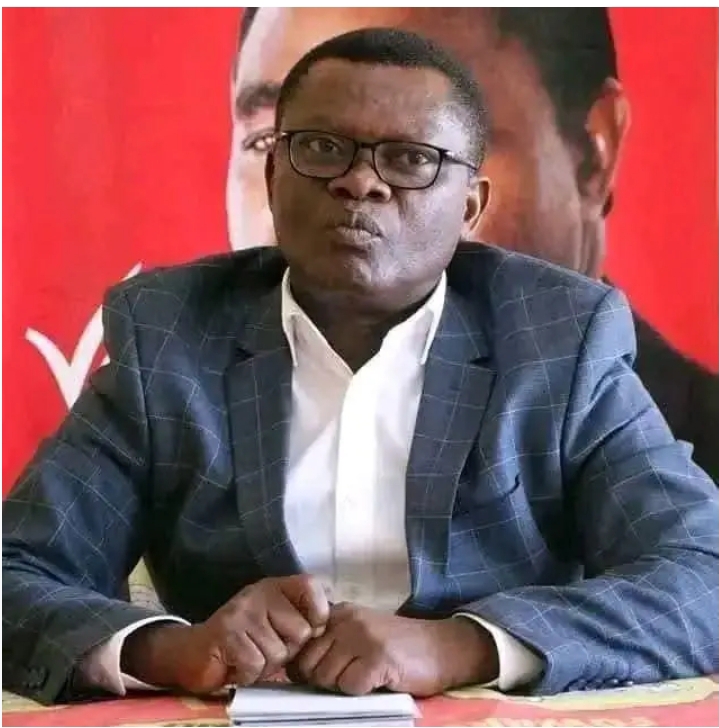
Every election produces a defining economic promise. In Zambia’s 2026 presidential race, one of the most consequential has emerged from the campaign trail on the Copperbelt, where NRPUP presidential candidate Brian Mundubile has urged farmers not to sell maize to the Food Reserve Agency (FRA) at this season’s official buying price of K347 per 50-kilogram bag. Instead, he has asked them to wait for a Tonse Alliance government, promising that the FRA would buy maize at K500 per bag if he forms government. It is a promise that speaks directly to the aspirations of farmers.
It also raises profound questions about food prices, public finances and the economics of Zambia’s staple commodity.
At first glance, the proposal appears compelling. For years, farmers have argued that the cost of producing maize has risen faster than the prices offered at harvest. Fertiliser, certified seed, transport, labour and land preparation have all become more expensive, squeezing already thin profit margins. Against that backdrop, a K500 floor price appears not merely generous but corrective.
For a smallholder selling 20 bags of maize, revenue would rise from K6,940 at the current FRA price to K10,000 under Mr Mundubile’s proposal. This additional income could finance the next farming season, pay school fees, reduce indebtedness or improve household welfare. There is little doubt that many producers would welcome such a shift.
The challenge, however, is that agriculture does not end at the farm gate. The maize purchased from farmers becomes the raw material for mealie meal, Zambia’s most important staple food. It moves through transporters, millers, wholesalers and retailers before reaching consumers. Every increase at the beginning of that value chain eventually works its way to the supermarket shelf. That is where the economics become considerably more complex.
According to agricultural economist Dr Charles Sinkala, maize represents more than 70 percent of the cost of producing mealie meal. If the FRA establishes K500 as the effective market floor, private millers would almost certainly have to compete at or near that price to secure grain. A higher acquisition cost would then be reflected in milling, packaging, transport and retail pricing.
Based on Dr Sinkala’s analysis, a 25-kilogram bag of breakfast mealie meal, currently retailing at approximately K250 to K280, could increase to between K370 and K420. For urban households, where mealie meal accounts for a significant share of monthly food expenditure, such an increase would not be marginal. It would be deeply consequential.
The proposal therefore exposes one of the oldest dilemmas in agricultural economics. A higher producer price strengthens farm incomes and encourages production. A higher producer price also increases input costs for processors and, ultimately, prices for consumers. The same policy that benefits the farmer may simultaneously place additional pressure on the family purchasing mealie meal at the end of the month.
The question is not whether farmers deserve better returns. Few would dispute that they do. The question is how those returns should be financed and who ultimately bears the cost.
There is also the fiscal dimension. The Food Reserve Agency is not an ordinary commercial buyer. It purchases maize using public resources. Raising the buying price by more than 40 percent would significantly increase the cost of strategic grain procurement. If the FRA were to purchase hundreds of thousands of tonnes at K500 per bag, the additional expenditure would run into billions of kwacha. That inevitably raises further questions.
Would government absorb the cost through higher revenues? Would it increase borrowing? Would expenditure be reduced elsewhere? Or would higher consumer prices become the mechanism through which the market finances the adjustment?
Supporters of the proposal argue that Zambia cannot continue expecting farmers to produce food at prices that fail to reflect rising production costs. They contend that stronger incentives would discourage cross-border smuggling, encourage greater investment in maize production and strengthen national food security. Those are legitimate economic arguments. But they do not remove the need to examine the other side of the ledger. Every price floor creates incentives, but every price floor also creates costs.
Dr Sinkala argues that the more sustainable solution lies not in permanently raising the FRA buying price but in lowering the cost of producing maize itself. Fertiliser remains the largest expense for most smallholders. Certified hybrid seed remains beyond the reach of many rural farmers. Mechanisation is expensive.
Affordable credit remains scarce, while post-harvest losses continue to erode incomes. Addressing those structural constraints would improve profitability without necessarily requiring government to increase the buying price every marketing season. It is a productivity strategy rather than a price strategy.
That distinction matters because agricultural policy is rarely about one harvest. It is about creating a system capable of feeding both the producer and the consumer over many seasons. A policy that substantially increases farm incomes but simultaneously prices mealie meal beyond the reach of vulnerable households merely transfers hardship from one part of the economy to another.
Equally, a policy that suppresses producer prices in the name of cheap food eventually discourages production and undermines food security. Sound policy seeks to balance both interests rather than sacrifice one for the other.
Mundubile’s K500 promise has therefore done something important. It has forced a national conversation about the economics of maize, the role of the FRA and the relationship between farm incomes and food prices. Those are conversations Zambia needs to have. They deserve rigorous debate, careful modelling and transparent explanation.
Campaigns are designed to create hope. Economic policy, however, must also withstand arithmetic. Every promise has a beneficiary. Every promise has a cost. The responsibility of voters is not simply to ask whether a promise is attractive. It is to ask whether it is sustainable, who pays for it, and what consequences follow once the campaign gives way to the realities of governing.
© The People’s Brief | Editor



Community Feedback