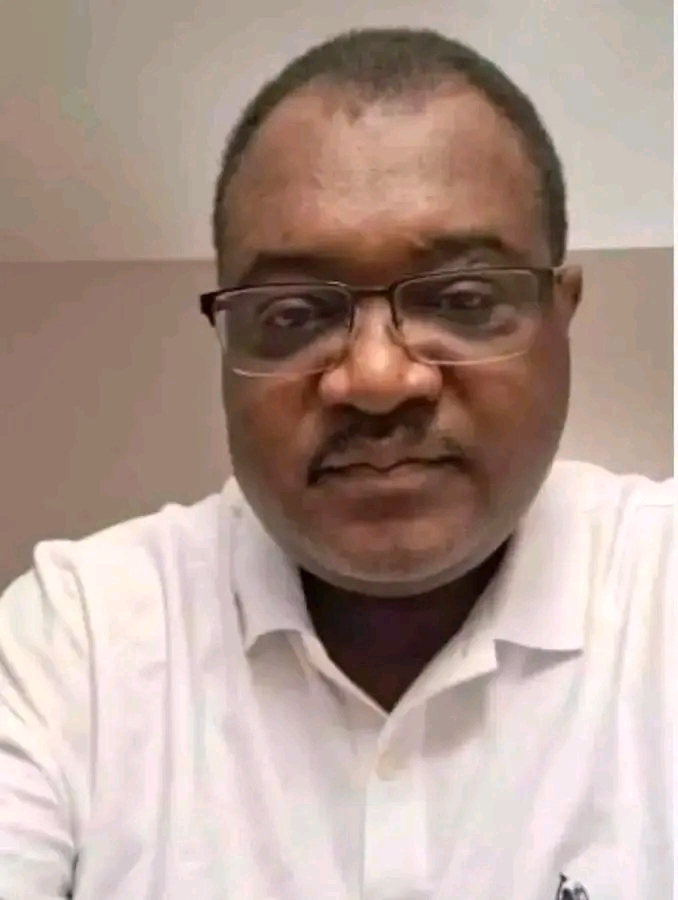
Jones Kasonso dies in US, death draws fierce reaction over his anti-Tonga remarks

Breaking News Zambia
News BRIEFING | Jones Kasonso dies in US, death draws fierce reaction over his anti-Tonga remarks The death of Zambian academic and political commentator Dr Jones Kasonso in the United States has triggered sharply divided reactions at home, with condolences from family and the diaspora community running alongside anger over ethnic remarks he made during […]
BRIEFING | Jones Kasonso dies in US, death draws fierce reaction over his anti-Tonga remarks
The death of Zambian academic and political commentator Dr Jones Kasonso in the United States has triggered sharply divided reactions at home, with condolences from family and the diaspora community running alongside anger over ethnic remarks he made during Zambia’s turbulent election period.
Kasonso’s younger brother, Newton Kasonso, announced his death in a family message, saying: “It is with a heavy heart and deep sorrow that I announce the passing of my beloved brother.”
“Words cannot express the pain and sadness we feel at this difficult time,” he said. “Your life was a gift to us, and although you are no longer with us, the love, memories, and moments we shared will never be forgotten.”
The Organisation of Zambians Abroad, where Kasonso was described as an avid supporter, also announced his death. OZA President Masheke Akashambatwa said the organisation had received the news “with sadness” and described Kasonso as “a great friend to many.”
“Our thoughts and prayers are with the family,” Akashambatwa said, adding that further details would be communicated when available.
But Kasonso was not an uncontroversial figure in Zambia’s political debate.
An academic who lived and worked in the United States, he became increasingly prominent online as a critic of President Hakainde Hichilema and an opposition sympathiser. His commentary became particularly heated around the August election and the security operation at opposition leader Brian Mundubile’s Kabulonga residence, where former Cabinet minister Mutotwe Kafwaya was shot dead.
It was after Kafwaya’s death that Kasonso published one of his most controversial statements.
“Tongas are a bunch of hateful clowns,” he wrote on Facebook.
He went further, saying: “Whenever you find one send it back to its maker,” before declaring: “We can’t have a country with Tongas no more.”
The remarks provoked anger among Tongas and other Zambians who argued that Kafwaya’s shooting, whatever the eventual findings about the security operation, could not legitimately be transferred into collective blame against an ethnic group.
The political context is important.
President Hichilema is Tonga and Southern Province remains one of his strongest electoral bases. But neither membership of the Tonga community nor voting heavily for Hichilema makes an ethnic group responsible for decisions taken by the presidency, police, military, intelligence services or any other arm of the State.
Kasonso’s remarks therefore went beyond criticism of Hichilema or the UPND. They explicitly targeted Tongas as a people and included language suggesting Zambia could not continue to exist with them.
His death has now returned those words to Zambia’s political conversation.
Some social-media users have offered condolences and urged restraint, arguing that political disagreement should end at the boundary of death and family grief. Others have responded very differently, recalling Kasonso’s statements about Tongas and saying his record makes it difficult for them to mourn him.
Some posts have gone further, saying his death “serves him right” because of what they describe as tribal hatred. Others are claiming he died from “bitterness”, depression or distress after the opposition failed to win the August election.
Those claims about the cause of death remain unsubstantiated.
Kasonso was visibly distressed by the election outcome in some of his subsequent online appearances and remained deeply critical of Hichilema’s victory. But there is no publicly established medical evidence connecting his death to the election, depression, political disappointment or any other cause.
His political statements, by contrast, are part of the public record.
This distinction matters because Zambia’s current political debate is increasingly confronting a familiar danger: disagreement over parties being transferred onto communities.
Politicians and their supporters are entitled to challenge voting patterns. They can ask why particular regions repeatedly support particular parties, whether opposition organisations have failed to penetrate certain provinces, or whether governing parties have become too dependent on regional strongholds
But blaming citizens collectively because their ethnic group or province votes a particular way crosses into a different territory.
Zambia’s elections have long produced pronounced regional voting patterns across different parties and administrations. A voter does not acquire collective responsibility for government conduct simply because people from his or her community helped elect the President.
Kasonso’s death therefore leaves two separate stories.
One concerns a family which has lost a brother and a diaspora organisation mourning a friend and supporter.
The other concerns a public figure whose political record included explicit statements against an entire Zambian ethnic group, remarks which remain relevant to the wider national debate over tribal language in politics.
Death does not require the press to erase that record. Neither does the record justify inventing a cause of death or celebrating it as punishment.
For now, Kasonso’s cause of death has not been publicly established.
What has been established are his words. And the divided reaction to his death shows how deeply those words were heard.
© The People’s Brief | Chileshe Sengwe ; Ollus R. Ndomu




Community Feedback