Inside Mundubile’s New Election Narrative

Breaking News Zambia
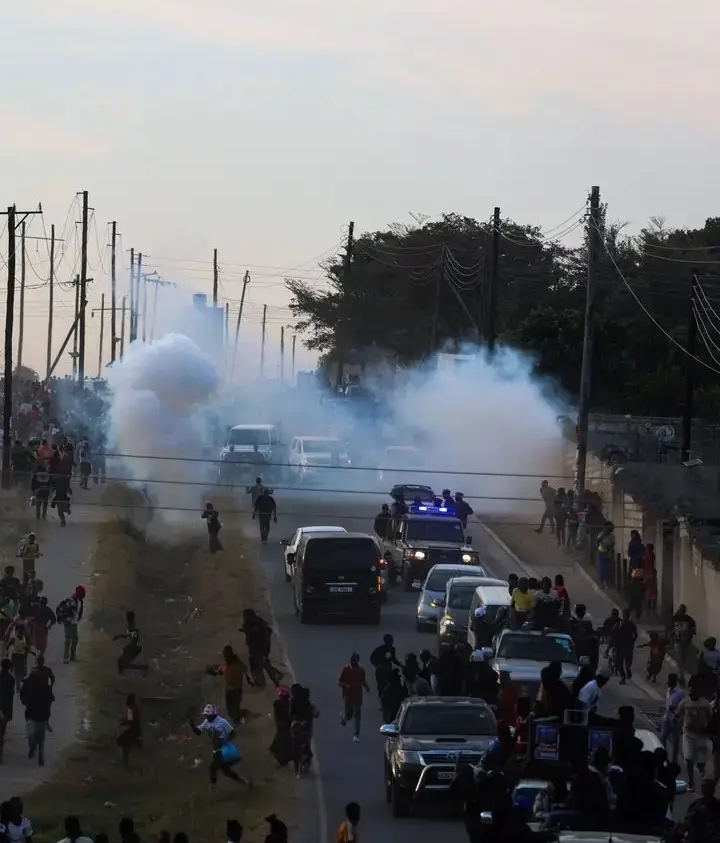
News🇿🇲 EXPLAINER | Inside Mundubile’s New Election Narrative Brian Mundubile’s Friday press briefing was about far more than the violence that disrupted his campaign in Mtendere and Kalingalinga. It marked a noticeable shift in the Tonse Alliance’s messaging, moving the campaign conversation away from jobs, the cost of living and governance towards the credibility of […]
🇿🇲 EXPLAINER | Inside Mundubile’s New Election Narrative
Brian Mundubile’s Friday press briefing was about far more than the violence that disrupted his campaign in Mtendere and Kalingalinga. It marked a noticeable shift in the Tonse Alliance’s messaging, moving the campaign conversation away from jobs, the cost of living and governance towards the credibility of the August 13 general election itself.
For several weeks, Mundubile has campaigned with unusual confidence for a first-time presidential candidate. He routinely refers to himself as “President Mundubile,” tells supporters that change is inevitable and delivers speeches filled with sharp attacks on President Hakainde Hichilema, often using sarcasm and local language to ridicule the government. The strategy has energised his supporters and helped establish him as the country’s most visible opposition figure.
Friday’s briefing reinforced that confidence while introducing another message: that the electoral process itself is already under scrutiny.
Standing before journalists, Mundubile argued that Zambians should not judge the election by what happens on polling day alone.
“The point to note is that an election is not an event. An election is a process.”
He claimed the opposition had entered the campaign under significant restrictions.
“I haven’t had my passport the past four months. I haven’t had my phones the past four months. My hands have been tied, my legs have also been tied, and somebody’s asking for a fair fight when they’ve got their hands and their legs free.”
The remarks did not emerge in isolation.
Earlier this week, the Tonse Alliance submitted a 10-point memorandum to the European Union Election Observation Mission, urging international observers to monitor not only polling day but the entire electoral environment, including the conduct of security agencies, public institutions and the Electoral Commission of Zambia (ECZ). Friday’s briefing expanded that argument, with Mundubile suggesting he would only accept an election that is “not only free and fair but seen to be free and fair.”
He also renewed his criticism of the Electoral Commission.
“ECZ cannot act if President Hichilema doesn’t tell them to act.”
The Commission has consistently maintained that it is an independent constitutional body. During Friday’s briefing, Mundubile did not present fresh evidence to support the allegation, but it reflects concerns his alliance has repeatedly raised throughout the campaign.
The emotional centre of the briefing, however, was the case of 10-year-old Mercy Banda, who was injured during Thursday’s disturbances.
Mundubile accused police of shooting the child and challenged President Hakainde Hichilema to publicly condemn the incident.
“Today we are talking about a 10-year-old girl, Mercy, who has been shot by his police officers… I want to hear you condemn the shooting of young Mercy.”
Hours later, government responded.
Information and Media Permanent Secretary Thabo Kawana dismissed reports circulating on social media that several people had been shot and killed during the clashes.
“We want to categorically dismiss as entirely false the claims that several people were shot and killed by police. We can assure the nation that no lives were lost.”
Kawana confirmed that Mercy Banda had sustained an injury during a police crowd management operation but disputed the opposition’s account of what happened.
“During a crowd management operation, our police officers discharged tear smoke canisters, and a young girl from Mutendere Compound sustained an injury from a pellet. She was promptly treated and discharged from the hospital, and we are actively continuing investigations into that specific incident.”
The distinction is important. It is established that violence occurred. It is established that Mercy Banda was injured. It is also established that she received medical treatment and was discharged.
What remains under investigation is the precise sequence of events that led to her injury. Government also rejected suggestions that police deliberately targeted the opposition.
According to Kawana, the Tonse Alliance formally notified Matero Police that its July 16 presidential campaign would be held at National Heroes Stadium. Police say security arrangements were made based on that notification. Authorities argue that the situation changed when the opposition instead conducted an uncommunicated roadshow through Kalingalinga and Mtendere.
“Our police did not target any opposition leader; the intervention was strictly aimed at restoring peace.”
Whether that explanation satisfies the opposition is a separate political question. It nevertheless forms part of the factual record surrounding Thursday’s events.
Perhaps the more important issue raised by Friday’s briefing lies beyond Mtendere itself.
Only two days earlier, Mundubile told ZNBC that campaigns had been largely peaceful and relatively fair despite isolated incidents. Following Thursday’s violence, the campaign narrative changed significantly. The conversation shifted from competing policy proposals to whether the election itself could be trusted.
This shift deserves attention because political messaging shapes public expectations.
Every candidate seeks to convince supporters that victory is possible. Mundubile has done so with remarkable consistency throughout this campaign. The challenge arises when confidence evolves into certainty. If supporters are persuaded that only one outcome is legitimate before votes are even cast, any different result becomes harder to accept emotionally, regardless of the evidence.
This is where electoral arithmetic also deserves consideration.
The Tonse Alliance has unquestionably injected fresh energy into Zambia’s opposition politics. Its rallies have drawn enthusiastic crowds, and Mundubile has emerged as the dominant opposition voice following the Patriotic Front’s defeat in 2021.
But elections are not won by rallies alone. The alliance has not fielded parliamentary candidates in dozens of constituencies across the country. In many areas, it has also not sponsored candidates for mayor, council chairperson or councillor. Those candidates ordinarily form the organisational backbone of a presidential campaign. They mobilise voters, recruit polling agents, monitor polling stations and help convert campaign momentum into votes.
Such an organisational reality does not prevent the opposition from winning. It does, however, caution against assuming that large crowds automatically translate into nationwide electoral strength.
Friday’s briefing also revealed an irony that has become part of Zambia’s political conversation.
Mundubile is a senior politician who rose through the Patriotic Front and now leads an alliance dominated by former PF leaders and supporters. During the PF’s decade in government, senior party figures frequently dismissed criticism from Western governments and election observer missions, arguing that Zambia’s internal affairs should not be influenced by foreign actors. Today, the alliance has formally appealed to the European Union Election Observation Mission to scrutinise the electoral process before polling day.
Supporters argue the circumstances have changed because they now occupy the opposition benches. Critics see a reversal of positions once defended while in government. Either way, it reflects how political perspectives often change with the transition from governing to opposing.
None of this means the Tonse Alliance cannot win the August election. Neither does it mean the UPND is guaranteed another term.
What it does mean is that political leaders carry responsibilities beyond winning votes. They also shape how supporters respond when results are announced.
President Hichilema knows what electoral defeat feels like, having contested and lost five presidential elections before finally winning in 2021. Mundubile is contesting his first presidential race. As polling day approaches, one of the greatest tests of leadership will not simply be how candidates campaign, but how they prepare supporters for every constitutional outcome.
Democracy is strengthened when parties campaign with conviction.
It is protected when they prepare their supporters to respect the ballot even when the ballot delivers an unexpected result.
© The People’s Brief | Ollus R. Ndomu

Community Feedback