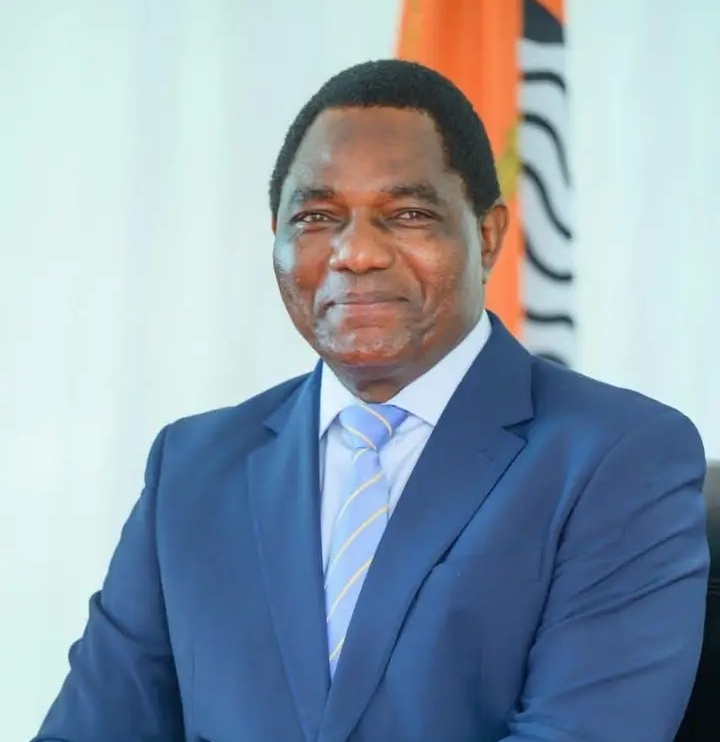
HH HAD NO POWER TO CLOSE COURTS — STATE HOUSE

Breaking News Zambia
NewsHH HAD NO POWER TO CLOSE COURTS” — STATE HOUSE Details in the Statement……. We have noted with concern claims that President Hakainde Hichilema ordered the closure of the courts on Monday, 24th August 2026 to prevent the opposition from filing election petitions. This allegation is inconsistent with both the constitutional order and the available […]
HH HAD NO POWER TO CLOSE COURTS” — STATE HOUSE
Details in the Statement…….
We have noted with concern claims that President Hakainde Hichilema ordered the closure of the courts on Monday, 24th August 2026 to prevent the opposition from filing election petitions. This allegation is inconsistent with both the constitutional order and the available facts.
President Hichilema is not only a firm believer in good governance and the rule of law, but equally in the principle of the separation of powers. The Judiciary is an independent arm of the State, and the President has neither the constitutional authority nor the power to determine when, how or from whom the courts receive filings.
The measures taken on Monday were not directed at the Judiciary alone. As the Inspector General of Police has publicly confirmed, security risk assessments were being carried out at selected key Government premises across the country, including institutions under the Ministry of Justice, the Ministry of Home Affairs and Internal Security, the National Prosecution Authority and the Attorney General’s Chambers.
The operations were intelligence-led and preventive, aimed at safeguarding Government institutions, public officers and members of the public accessing those premises. A precautionary measure applied across several arms and departments of Government cannot reasonably be presented as an operation aimed at a single litigant.
Nor is the suspension of court operations without precedent. Court business in Zambia has been suspended before for reasons entirely unconnected to any matter pending before the courts, including during the pandemic, when sittings were curtailed and calendars disrupted nationwide in the interest of public safety. On each occasion the suspension was an administrative response to conditions on the ground. On each occasion normal business resumed. Precedent of this kind is neither novel nor partisan.
The record on timing is also clear. The Electoral Commission of Zambia declared the presidential result on Tuesday, 18th August 2026. The constitutional window opened on that date. The courts sat, received filings and transacted business on the working days that followed. No petition was lodged against the presidential result during that period. The law fixes the outer limit of the filing period; it does not require a petitioner to wait until its final hours to approach the court.
If a petition was genuinely prepared but prevented from being filed, those making that claim should produce it, together with evidence of when and how an attempt was made to lodge it. Serious allegations against constitutional institutions require serious evidence.
Security measures affecting physical access to premises should not be conflated with the denial of judicial remedy. The remedies available under Zambian law remain exactly what the Constitution provides, and the courts remain open to those who invoke them.
There is also remarkable irony in some of the loudest criticism of the courts. Some who now seek the protection of those same courts have previously fled the country or sought refuge in foreign jurisdictions when summoned to appear before them. Respect for the Judiciary and the rule of law cannot be selective
The election is over. Those with legitimate grievances are entitled to pursue every remedy the law provides, and Government will not stand in their way. Political disappointment, however, cannot justify attributing the decisions of independent institutions to the Head of State.
President Hichilema respects the constitutional independence of Zambia’s institutions and will continue to do so. Zambia must now move forward peacefully, constitutionally and together.
ISSUED BY:
Clayson Hamasaka
Chief Communications Specialist
State House


Community Feedback