
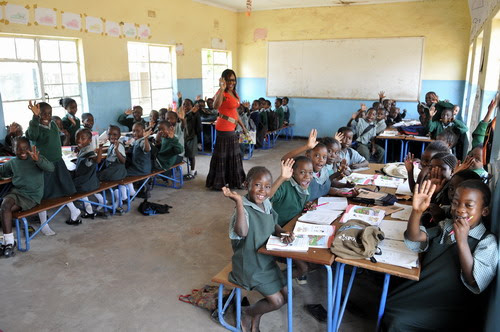
Debt-burdened parents now abandoning private Schools for free education, leaving unpaid fees behind

Breaking News Zambia
EntertainmentThe Zambian Open Private Schools Association (ZOPSA) […]
The Zambian Open Private Schools Association (ZOPSA) has warned that while free education has expanded access to learning, it has also created a growing financial crisis for private schools as pupils abandon institutions with outstanding fee arrears and transfer into public schools at no cost.
Speaking in an interview with Zambian Business Times – ZBT, ZOPSA President, Kennedy Mwansa said private schools support government efforts to make education accessible but are increasingly struggling with the unintended consequences of the policy.
“Private schools remain a critical part of Zambia’s education system and in many communities there are more private schools than public institutions serving learners,” said Mwansa.
He noted that private schools have historically bridged the infrastructure gap by absorbing thousands of pupils who would otherwise have had limited access to classroom space.
However, Mwansa said the introduction of free education has triggered a migration of learners from low-cost private schools into public institutions, placing many private operators under severe financial strain. “Most parents are happy that there is a free education policy now, so when their children were in private schools they are preferring to take that child now to a government school,” he said.
Mwansa added that the challenge extends beyond enrolment losses because many parents are leaving behind unpaid school fees that private schools have little chance of recovering. “Within ourselves as private schools, that is also another challenge that we face, where a child leaves another school with arrears and they go join another school free of charge without anything,” he said.
Mwansa argued that the situation effectively transfers the financial burden of education onto private institutions that have already provided teaching services, learning materials and infrastructure. He further called for a national policy requiring learners transferring between schools to clear outstanding obligations before admission into another institution is approved.
“We urge the government to help us on that, to ensure that at least when students are transitioning from one school to the other, they should be able to have cleared the arrears where they’re coming from,” said Mwansa. Meanwhile, Caritas Zambia Executive Director, Fr Gabriel Mapulanga indicated that free education has generally expanded access to learning but warned that the financing model remains a concern for institutions that depend on supplementary parental contributions.
Fr Mapulanga told ZBT that Catholic schools have historically delivered quality education because of strong institutional commitment and additional financial support from parents, adding that government grants alone are often insufficient to sustain standards. He added that if grant-aided schools are expected to operate entirely free of charge without adequate funding mechanisms, the policy could eventually have a negative impact on educational quality
Article by Phillip Sinkala




Community Feedback